
Riverview Charter School
Close-Knit Community Embraces Excellence in Education
story by JEANNE REYNOLDS photos by SUSAN DELOACH and OTTO PHOTOGRAPHY
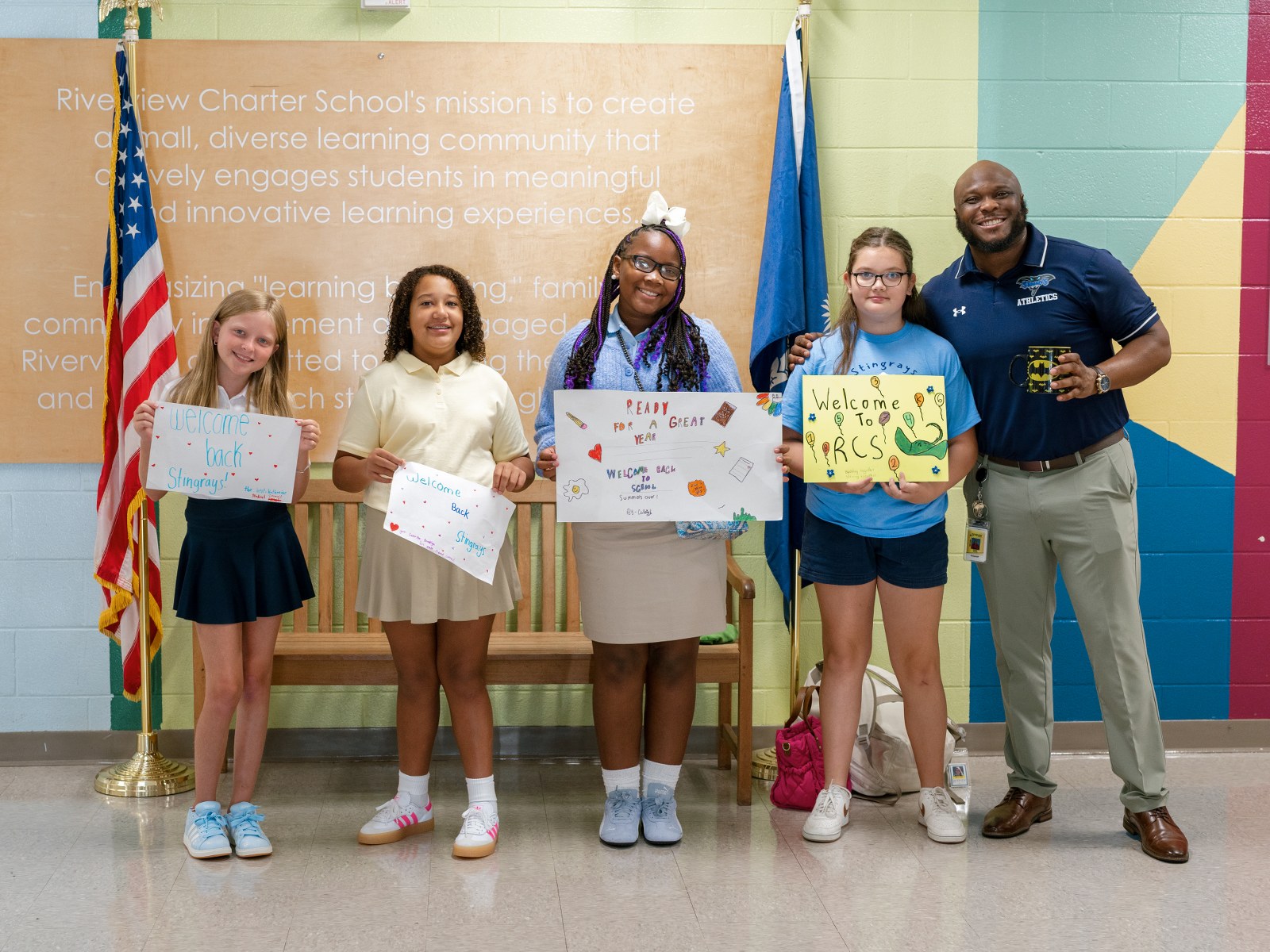
Spend just one hour inside the halls of Riverview Charter School, and you’ll likely leave with a smile on your face and the feeling you’ve just received a huge group hug. That’s because Riverview sees its purpose as much more than a school — it’s a community of students, teachers, staff, parents and board members united in a vision to provide an excellent education in an environment where students of all backgrounds know they’re valued and cared for.
Riverview lives out its mission in ways big and small every day. Take a recent bookfair, for example: The school’s annual fund provided more than $2,500 to ensure all students were able to participate in this year’s bookfair alongside their peers, new books in hand.
“Paying those receipts was the highlight of my day,” says Davontae Singleton, the school’s executive director. “To me, that moment captures how our community comes together to make sure all our children can participate fully and feel included.”
BLAZING A NEW TRAIL
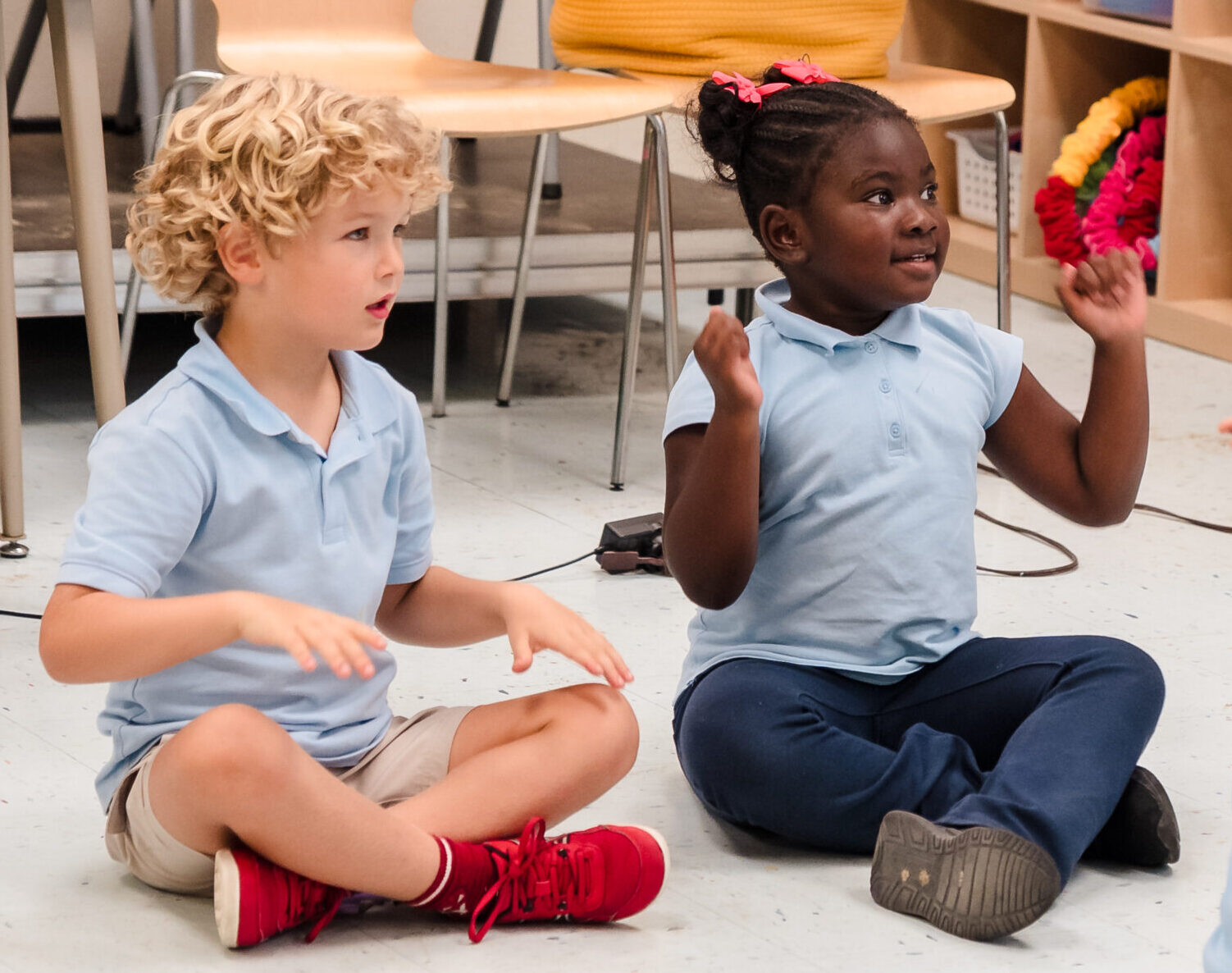
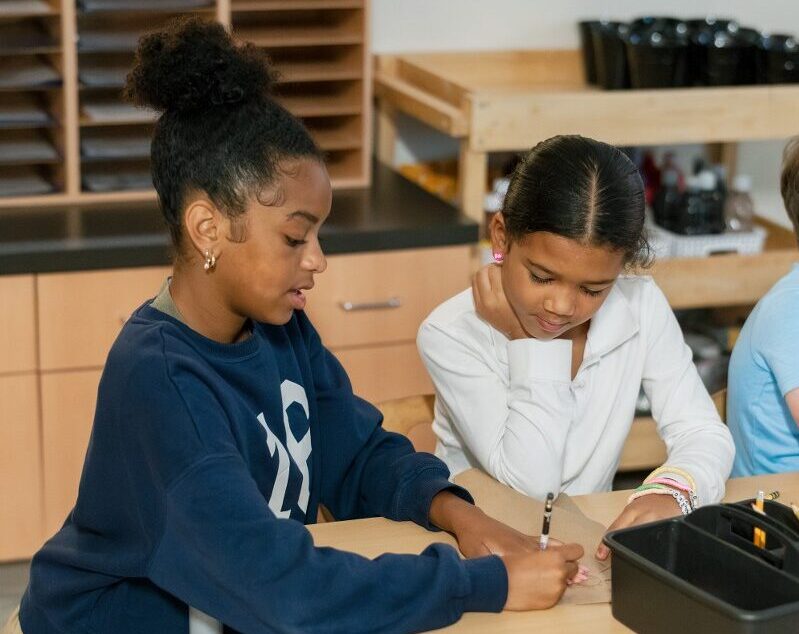
Riverview is Beaufort County’s first public charter school, founded by a group of parents with the belief that a small group of citizens can change the world. The school first opened its doors in 2009 with 254 students, later expanding to to its capacity of 720 students. Like all public schools, it’s tuition-free, serving students from a cross-section of academic and economic levels throughout Beaufort County. Students must apply for admission. To preserve the close-knit community focus of the school’s charter, Riverview’s class sizes are capped at 20 students per class in kindergarten through eighth grade. To allow for equitable access, students enter a lottery system to be awarded a spot in an available grade. To date, during every year since the school’s opening, Riverview has received more student applicants than available spots — yet this relatively tiny school is making a textbook case for the power of combining a community approach with innovative approaches to deliver an exceptional whole-child education.
What makes Riverview so special today is rooted in the vision of our original founders and founding team, who imagined a school where academic excellence, meaningful relationships, and a true sense of community could thrive together,” says Mr. Singleton. “Nearly two decades later, we have the privilege of building upon the foundation they established, and so much of what makes Riverview extraordinary today is a reflection of the seeds they planted.”
CORE VALUES AND BIG IDEAS
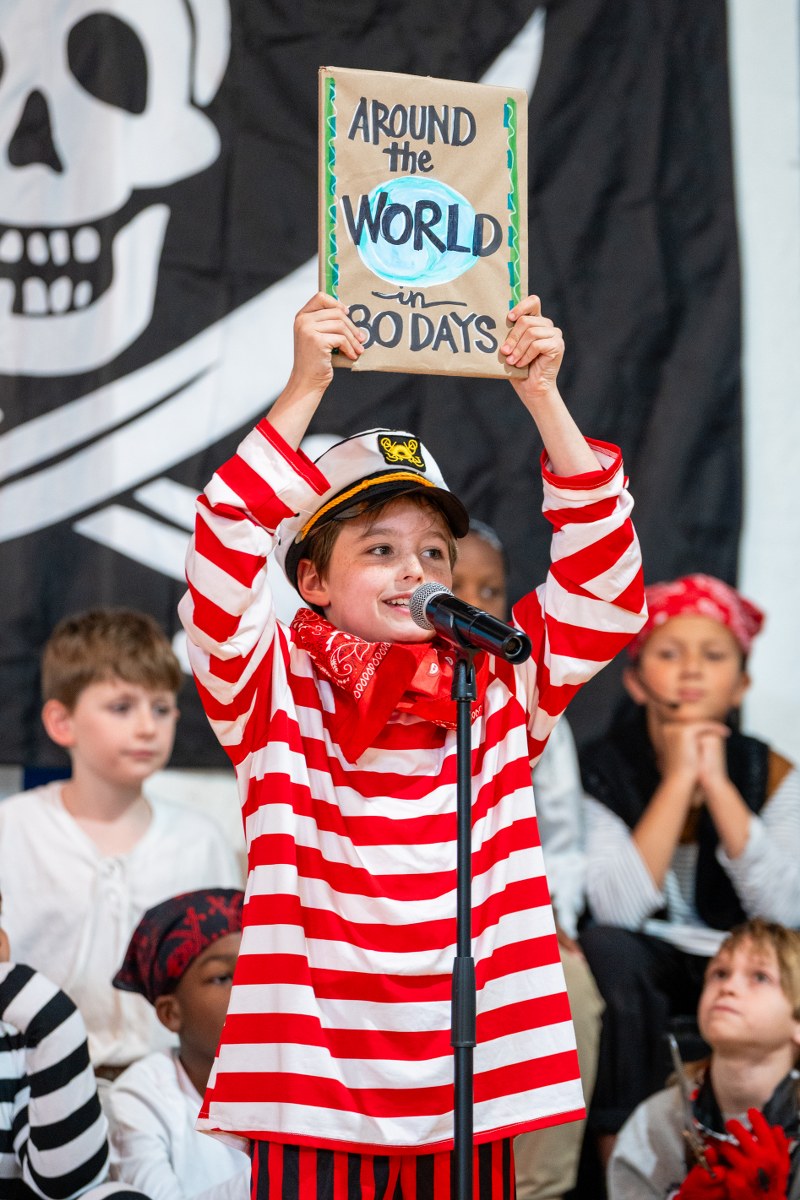
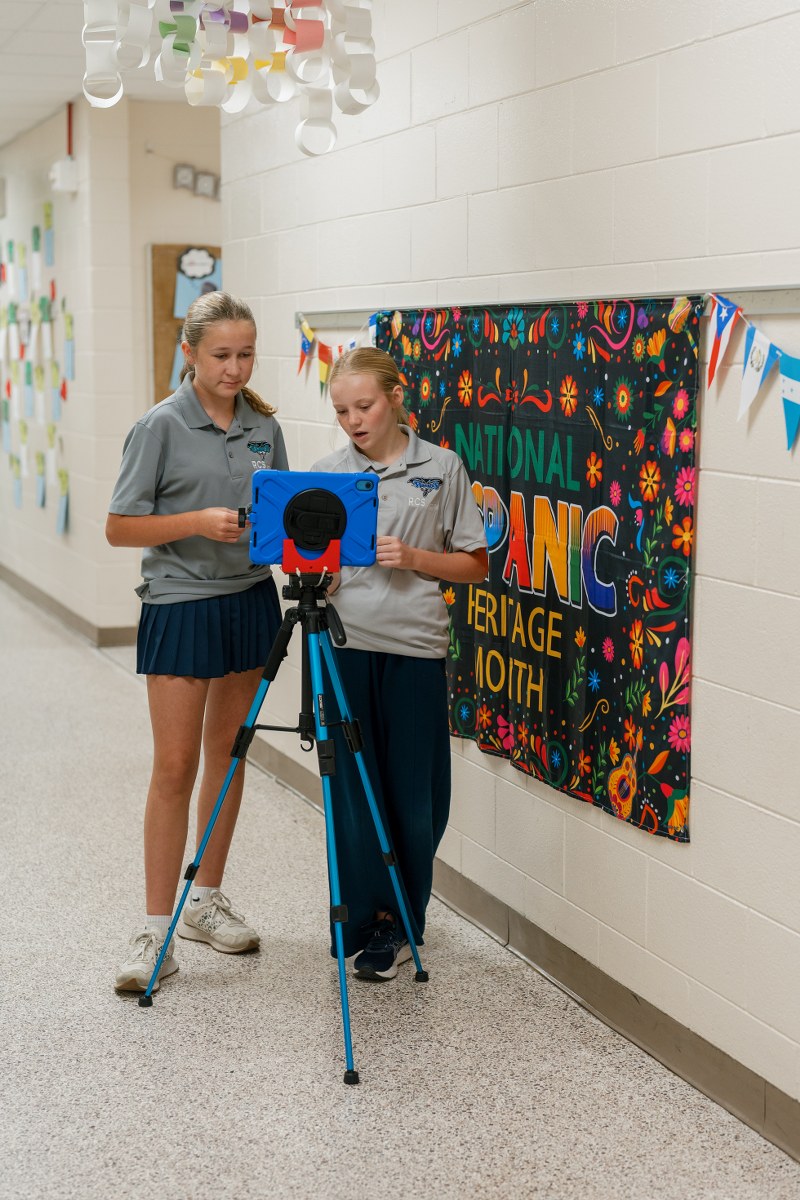
Riverview’s approach to learning, relationships and challenges is shaped by its core values: optimism, gratitude, empathy, cooperation, integrity, stewardship, mindfulness and perseverance. Students are recognized for exemplifying those values as much as for their academic success — and their impact goes far beyond the classroom.
“These are qualities children carry into their families and communities,” Mr. Singleton explains. “They’re central to the people we hope our students become and the communities they support and create in their adult lives.”
Big ideas also are a big deal in Riverview’s educational approach and curriculum. Each block of three grades has integrated units of study centered around big ideas to help students connect concepts across subjects and apply their learning beyond the classroom.
The curriculum for kindergarten through second grade focuses on community through the big ideas of beginnings, cycles and patterns, and systems. For example, kindergarten students learn how seeds grow into plants, in first grade discover those seeds are part of a lifecycle, and in second grade experiment with how the lifecycle of a plant fits in to a larger ecosystem. They become aware of themselves as part of something larger: their families, their school, their community, their country, their culture and their world.
The curriculum for grades three through five focuses on the concept of culture with the big ideas of adaptation; conflict and cooperation; and out of many, one. These students explore human culture and environments through a three-year study of American history and the developing scientific world. They learn to compare times of conflict and cooperation in our emerging and growing nation, and how our nation’s growth fueled geographic, economic, political and technological/scientific power.
The curriculum for grades six through eight focuses on the big ideas of contributions and transformations, synergy, stability and change as part of the concept of world. Students explore ancient civilizations and religions around the world, the Earth’s geological history, weather and climate, human body systems, ecology and more.
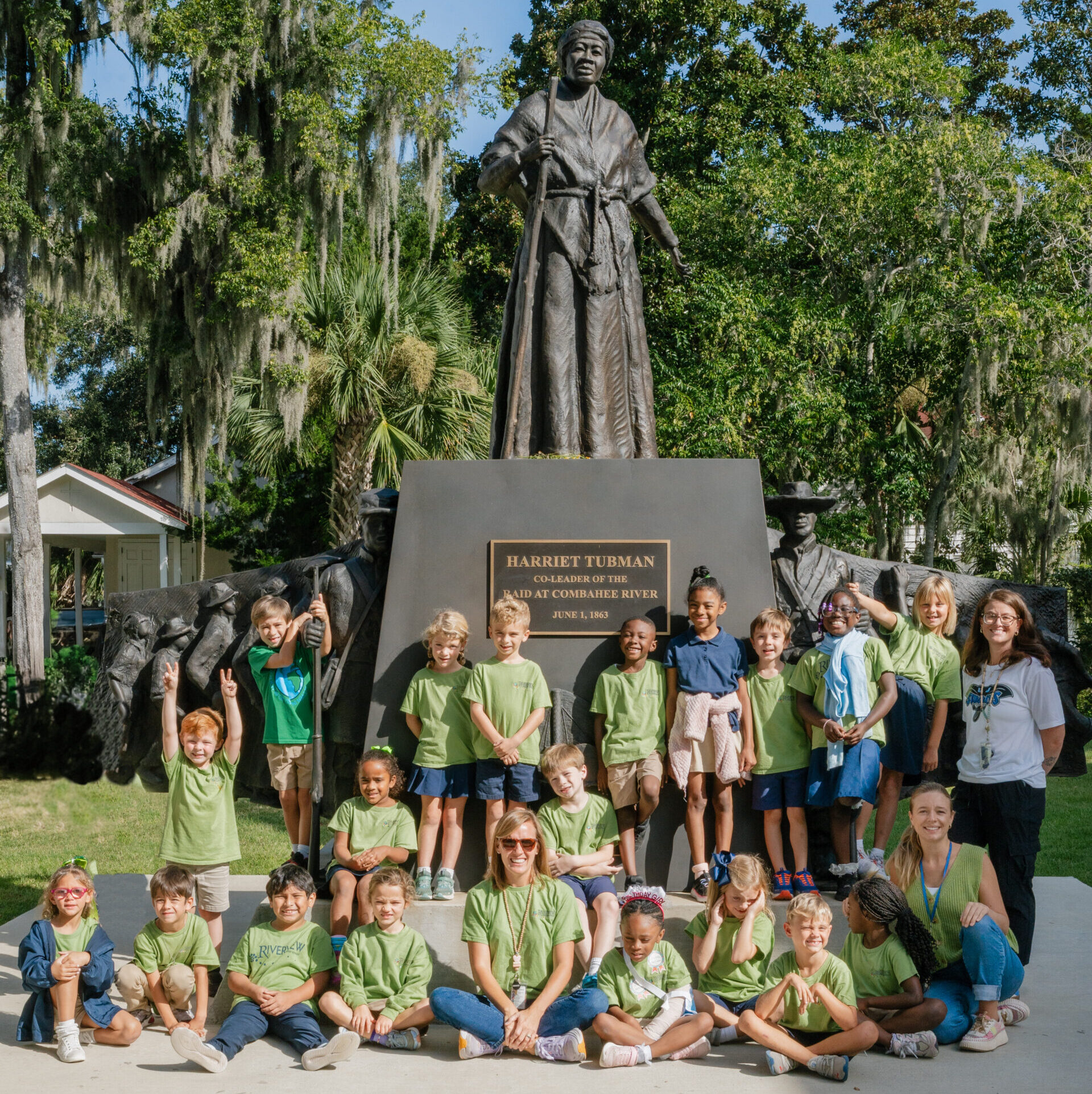
Every class takes at least six field trips each year, and each cycle includes a capstone field experience that extends the walls of learning outside the classroom: a trip to a local barrier island for second graders, a visit to Washington, D.C., for fifth graders, and a trip to Costa Rica for eighth graders. These trips help students to see they’re part of something bigger, rather than learning, living and working in isolation.
A Riverview education also includes foreign language studies beginning in kindergarten, arts and music activities, and athletic programs including cross country, volleyball, basketball, cheerleading, soccer, baseball and softball.

INNOVATION IN ACTION
Riverview is required to meet the same academic and testing requirements of other district schools, but its charter school structure gives it an important advantage: autonomy over its instruction and daily operations.
“We have all the support of the district, but we’re also separate, so we’re able to be innovative and nimble,” says Karen Miller, director of upper grades.
The school’s governance by an active, involved board of directors that includes parents and community stakeholders also facilitates innovation.
“Our board members want to be part of something great,” Mr. Singleton says. “We explain to them what we want to try, and they say, ‘What do you need to make it happen?’”
The school’s Stingray Scholars program is a prime example of Riverview’s innovative approach to a common concern and the strong support of its board. “We do our very best to be wise and prudent stewards of the dollar. We’ve been very fortunate over the past year, however, to have received special funding from a donor family in support of the life-changing work of Stingray Scholars. Without that gift, this program would not have been financially possible,” explains Geneva Baxley, board member. As in any school, some students struggle in different subjects and can benefit from additional support. But instead of labeling the program as after-school tutoring, Riverview flipped it around to emphasize the leadership potential of the participating students.
“We positioned it as an expectation to be a leader,” Mr. Singleton says. “The focus isn’t on tutoring, it’s on scholarship.”
And it’s not just semantics, points out Dr. Nan Burvenich, director of academics. “This program is unique. We’ve staffed it with the best of the best of our teachers. It’s free, and we even provide free transportation home. We want all families to know that they have access to this education. The child who is struggling is exactly the child who we want to attend. We’re for ALL students.”
The student response has been so positive. “We now have students clamoring to stay two hours after school,” Mr. Singleton adds with a laugh.
And the Riverview team is eager to share their innovations and ideas with other schools to help them succeed, too.
“If something is working well here, I want to shout it from the rooftops,” Mr. Singleton says.
“We’re like a think tank,” agrees Erica Martin, who chairs Riverview’s board of directors. “We want to make sure what we’re doing can ripple into the community as a whole. We want to take the barriers away, so all children in our community have access to an exceptional education.”
EARNING HIGH MARKS
These efforts are bearing fruit, school leaders say. Both the elementary and middle schools have achieved “excellent” ratings for academics by the S.C. Department of Education’s School Report Card program. And the school recently learned it has already exceeded a statewide goal for 75% of students to demonstrate grade-level proficiency in English language arts (reading and writing) by 2030. To put that in perspective, district and state proficiency levels currently hover around 60%.
Mr. Singleton attributes this remarkable achievement to the shared effort of the school’s community, including the daily work of teachers, the perseverance of students, and the partnership of their families, the board of directors, and community supporters. The school’s annual theme may say it best: “Building together, thriving together” reinforces its vision for the future while also emphasizing the key connection of its entire community in driving student success.
 FAMILY AFFAIR
It’s no surprise that very few students leave the school once they start, and many students follow older siblings through the door. Parents with multiple children attending the school say they see significant differences between those who began their education at Riverview and those who started in a later grade.
“My son came in fourth grade, and my daughter started in kindergarten,” Erica recalls. “Their foundations were drastically different. My daughter got the emotional support she needed from the beginning, so she knew how to handle challenges when things got tougher. My son struggled more with that.”
Riverview’s innovative approach to student success carries into their lives at home and the broader community. For example, the school’s Parent University program invites entire families to campus — including dinner and child care — to address the challenges of raising children and encouraging academic focus, especially in today’s digital world.
“We realize families are balancing a great deal, ” Mr. Singleton says. “The message is ‘You’re not alone.’”
“My hope is every child leaves Riverview knowing they’re valued, feeling confident in their ability to learn, and understanding they have something meaningful to contribute,” he continues. “We’re proud of their academic success, and we care deeply about the people they’re becoming.”
Fast Facts about Riverview
• Grades kindergarten through 8
• 720 maximum school enrollment
• 20 students per homeroom with
4 homerooms per grade level
• 15-to-1 student-teacher ratio
• Excellent rating on state standards for academic achievement
• 80.3% of elementary school students meet or exceed state proficiency standards in English language arts
• 67.4% of elementary school students meet or exceed state proficiency standards in math
• 80.6% of middle school students meet or exceed state proficiency standards in English language arts
• 61.1% of middle school students meet or exceed state proficiency standards in math
• School goal is 85% meet or exceed by 2030 (state goal is
75% goal)

