

A Broken Bell
A Lasting Message
story by MICAH PEPPERS photos by CHARLOTTE BERKELEY
 In December 2009, Scott Cornwell signed up to ring a bell for The Salvation Army at the Mall of America in Minnesota. It was a simple volunteer opportunity through his employer, The Toro Company, and he figured he’d spend a few hours collecting donations before heading home. What he didn’t expect was that the bell he was handed that day would eventually become the inspiration for a children’s book. The bell was in pretty rough shape. Someone had taped its handle together, and used a wire and washer to keep it working. Still, when Scott began ringing it, he noticed something unusual. “My bell was clear and crisp,” he remembers. “It had this distinct sound.” Other volunteers were ringing bells at entrances throughout the mall, but Scott kept thinking about the one in his hand. It didn’t look like much, yet it sounded beautiful. Before his shift was over, he had begun developing an idea that would stay with him for years.
Today, Scott and his wife, Kari, live on Fripp Island, a place they visited for years before finally deciding to make the Lowcountry home. The couple previously lived in Fort Mill, SC, outside Charlotte where they raised their two daughters. Kari spent her career teaching second grade, while Scott worked in the corporate world before transitioning into private practice in leadership development. He is currently president and managing partner of an organization called the Center for Intentional Leadership.
With their daughters grown and both living in Charleston, moving closer to the coast made sense. “We always vacationed and had a second home on Fripp,” Scott explains. “Both of our daughters live in Charleston, and we started asking ourselves, ‘Why aren’t we living here?’” They eventually built a home on Fripp Island, and retirement has given Kari the chance to devote more time to her artwork. “Kari has always been an artist,” Scott says. “Being a full-time teacher and a mom of two daughters is a lot. She left teaching on a high. She wasn’t burned out. She loved it. It was just a good time for her to make art a priority.”
Kari is now vice president of the Fripp Island Art Guild and has opened Chatty Dragonfly, her studio in Beaufort’s Freedman Art District at the King Street Gallery. Scott says watching her become involved in the local art community has been one of the best parts of their move. “One of the most amazing things about Beaufort is its thriving art community,” he says. “It’s continuously blossoming. It’s been fun watching her step into that and watching her thrive.”
While Kari has been busy establishing her studio, Scott has returned to a project that began during that December afternoon in Minnesota. At the time, he was working for The Toro Company, which had partnered with The Salvation Army to provide volunteers for its annual Red Kettle Campaign. “I signed up to pull a shift on a cold December day during the week,” Scott recalls. “I grabbed a bell and started ringing.” As he stood there, he started thinking about the condition of the bell, and the people who receive assistance from The Salvation Army. “I was just standing there by myself for a while, and I started thinking about what The Salvation Army really does,” he explains. “But not just The Salvation Army. Organizations that invest in people who are down on their luck. They, in a way, restore them to make music again and bring them back to life.”

The comparison stuck with him. Here was a bell that had clearly seen better days, but someone had taken the time to repair it rather than throw it away. And despite its appearance, it still worked beautifully. “I was just standing there by myself for a while, and I started thinking about what The Salvation Army and similar organizations really do. They invest in people and those who are down on their luck. It’s Christmas time, and I just wanted volunteer hours, but I started wondering what was the real reason behind all of this? My daughters were very young at the time, and I often made up stories to tell them. I began thinking about how I would tell them about this experience. And that’s when I came up with the broken bell named Bella.”
In the story, Mr. Peterson discovers Bella and recognizes that the damaged bell still has something special to offer. “Mr. Peterson became symbolic of those who invest in us and see something in us that others may not see,” Scott explains. For a while, it was simply a story Scott shared with his children. But unlike some of the others he had made up, he kept coming back to this one. “I would make up stories for my daughters, and after a while, I thought this story might have some legs,” he says. “It wouldn’t leave me.”
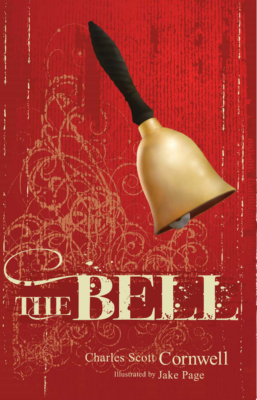 Scott eventually wrote the story down and began looking into publishing it. He had no experience writing children’s books, but he thought The Salvation Army might appreciate the connection to its mission. He reached out to Annette, a communications director with the organization, and told her what he had in mind. “I’ve written a story called The Bell, and you may think I’m crazy, but I would love to partner with you and work on this,” he remembers telling her.
At the time, Scott’s day job was working a corporate role at Toro in the lawnmower and irrigation industry, so publishing a children’s book was unfamiliar territory. Annette, however, liked the concept and offered to help distribute whatever copies he could produce. The project moved forward, and during its first year, more than 1,000 copies of The Bell were sold through the partnership.
Scott was later invited to speak at a Salvation Army gathering in downtown Minneapolis. More than 150 people attended, including individuals who were experiencing homelessness, recovering from addiction, or receiving help as they worked through difficult circumstances. He shared the story of Bella and Mr. Peterson, but it was what happened afterward that made the biggest impression on him.
A woman came up to Scott and thanked him. “Thank you for telling me my story,” she said. She went on to explain that she and her daughter had escaped an abusive situation. She had spent years believing she had little value, but with support and assistance, she was beginning to rebuild her life. She had recently purchased her first townhouse, something that once seemed out of reach.
Scott also heard from someone who told him he had learned to read using The Bell. “The last thing this world needs is another guy writing another children’s book,” Scott says. “This is about hope and potential. People who invest in us and see potential in us when we can’t.”
 That idea has been part of The Salvation Army’s work for generations. Its red kettle tradition began in San Francisco in 1891, when Captain Joseph McFee was looking for a way to provide Christmas meals for families who couldn’t afford them. McFee remembered seeing a collection pot in Liverpool, England, and decided to try something similar. He placed a kettle near a busy ferry landing and asked people to contribute what they could. The idea eventually spread across the country. Today, the red kettles are a familiar sight outside grocery stores, shopping centers, and other businesses during the holidays.
Volunteers generally begin ringing bells around Thanksgiving and continue through Christmas Eve. The donations collected help support The Salvation Army’s work throughout the year, including food assistance, emergency shelter, financial assistance, disaster relief, and other services for families and individuals in need. For Scott, learning more about the people served by the organization helped him understand why his little story connected with so many readers.
After the book’s initial success, Scott returned to his career and family responsibilities. Years passed, and when the original publisher went out of business, copies of The Bell became increasingly difficult to find. He still had the illustrations and original printing files, though, and the idea of bringing the story back never completely went away.
Eventually, Scott decided to try something different. Rather than simply reprinting the book, he worked with a professional production company to create a 10-minute animated film based on Bella’s story. He also created thebellstory.com, a website where people can watch the trailer, learn about the project, and make digital holiday cards. Paperback copies of The Bell are available through Amazon, and a limited number of hardcover copies will be offered at Kari’s Beaufort studio at the King Street Gallery. Scott also plans to donate a portion of the proceeds to the local Salvation Army. “I really hope this story reaches someone this season,” he says. “The greatest gift we can give someone is seeing people. Whether seeing the bell or seeing someone else, when we see someone, we bring humanity back.”
To him, it isn’t simply about someone getting another opportunity. It’s about the person who chooses to help make that opportunity possible. “When I think about redemption, that would mean that there’s a redeemer,” he explains. “The gift that we can give to others, by helping them see something they can’t see in themselves, is a profound act of grace and mercy.” And he doesn’t believe that kind of help should come with strings attached. “If I help fix the bell, what do I get in return? Nothing,” Scott says. “It’s unconditional love.”
For Scott and Kari, moving to Beaufort has been an opportunity to explore interests and become involved in a community they already felt connected to. Kari has found a place for her artwork, and Scott is looking forward to sharing Bella’s story with a new audience. “Maybe your most impactful years are still ahead of you,” Scott says. “There are different ways of self-discovery and discovering your potential. Beaufort is so welcoming to people interested in exploring those things.”
And perhaps that is the message Bella was always meant to share. It’s hard to imagine that when Scott volunteered for a few hours at the Mall of America back in 2009, he would still be talking about that experience nearly 17 years later. Sometimes, the things we believe are broken simply need someone willing to recognize their beauty and potential.
For Scott Cornwell, it all began with a broken bell that never stopped making beautiful music.