CLYDE WILLIAMS
The Art of Restoration
story by HEATHER STEINBERGER photos by CHARLOTTE BERKELEY
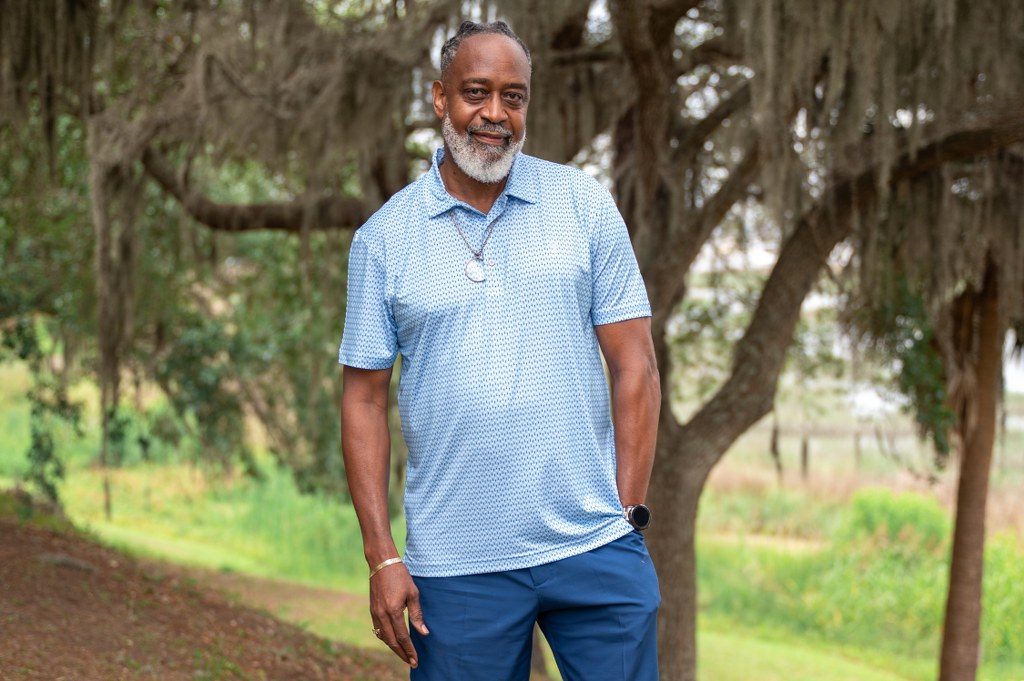
 “If a painting has been sleeping for 80 or 90 years, you can’t wake it up suddenly,” Clyde Williams says softly over a cup of coffee at Urban Brew + Co. “You have to let it wake on its own. Listen, and it will speak to you. It will dictate what needs to be done.”
For Clyde, restoration is both art and science, a careful balance of technical skill and intuition that allows him to work in conversation with the original artist, the object and the passage of time. It’s an approach that has served him well at Art Restoration by Clyde, a Beaufort-based business that he has built over 35 years.
Clyde grew up on Congress Street in downtown Beaufort, one of five children in a family with deep roots in the community. He and his sister Norma were the youngest, and he says that art found him early.
“My mother, she would draw a picture of this lady, and she would do it the same way every time,” he says. “Whenever I had a bad day, I would say, could you draw that lady?”
With a laugh, he adds, “As an artist myself, I started with stick people. Then they gained weight.”
When spelling did not come easily, images did. Clyde remembers turning a simple grocery list into a series of pictures, with each item translated visually instead of written out.
Even the family home became a place of experimentation.
“I started doing artwork on the house we were raised in,” he says. “They found out it was me when I got older and was too big to be in trouble.”
He enjoyed art classes in high school, where classmates told him he was more talented than the teacher. Like many teenagers, he also liked spending time at the football games, where he met a young woman named Claudia who twirled a rifle with the school’s color guard. He asked her out.
They dated for just two months before Clyde moved away, and although he did return to Beaufort after his high school graduation, he didn’t see Claudia again for 40 years.
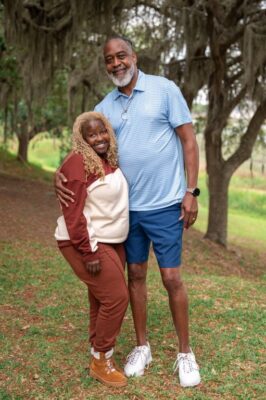
The reconnection came unexpectedly when Clyde stopped at a salon where Norma was having her hair done. Her beautician turned out to be the same woman he’d fallen for as a teenager, and today, they are married.
When Clyde first returned to Beaufort, he found work as a cook and believed that would be his career. He had no idea he would reunite with Claudia one day — or become a master of art restoration and conservation.
One day, he came across a newspaper ad placed by William Leon Stacks (1928-1991), a Hilton Head-based artist and conservator who was looking for a picture framer. An American Expressionist known for his Lowcountry landscapes and his work as a teacher and mentor, Stacks hired Clyde to handle basic cleaning and framing.
Then the artist became ill, and some restoration projects stalled. Stacks’ wife, Gloria, recommended sending the work to Atlanta. Clyde had a different idea.
“I thought, why would we send it out?” he says. “So I finished it myself. He cried. He didn’t understand how I’d done it, because he never showed me.”
From that moment, the work shifted. Gloria Stacks took over the business side of the operation while Clyde handled the restoration projects, a role he stepped into without fully realizing its significance.
“I didn’t see the big deal, but Leon and everyone else thought it was,” he says. “It didn’t even feel like work to me.”
When Stacks died in 1991, Clyde carried on, building a reputation over time for the range of his skills and the care he brings to each piece. Today, his projects include oil and acrylic paintings, fabrics, frames and gilding, photographs, furniture, sculpture, ceramics, rare books and more.
“Clyde does it all,” says Norma, who joined the business seven years ago and currently handles communications, client relationships and certain aspects of the restoration work.
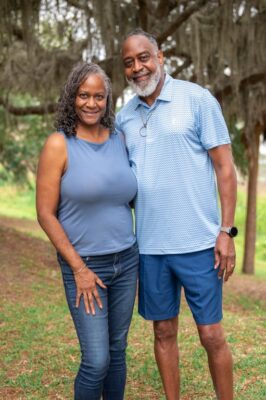
Clyde’s son Je’Clyde came on board two and a half years ago at age 22, the same age Clyde was when he first began, and Claudia is involved as well. Together, they operate out of spaces in Beaufort and Columbia, serving families, collectors and institutions.
“Business grew by word of mouth, and now everybody knows,” Norma says. “Conservationists are hard to find in this area. Penn Center and the Savannah College of Art and Design call us; otherwise, they might have to send pieces to Chicago or New York.”
What sets Clyde apart is not only the breadth of what he restores, but the complexity of the work and the precision of what he sees. Subtle variations in color and damage that might escape another eye are things he identifies quickly, often before anyone else notices them.
“He sees things no one else can see,” Claudia says. “And he sees them right away.”
Each piece arrives with its own history, and often, its own story of loss. A carousel left outdoors was nearly destroyed by salt spray and exposure. It had been a gift to a mother from her late son, and when she saw it fully restored, she was in tears.
One fire-damaged painting arrived with a water-streaked, blistered surface; Clyde called it one of the worst cases he’d ever seen. Another painting, carefully rolled up and carried beneath a transatlantic immigrant’s dress to avoid confiscation, had deteriorated so badly the material itself needed to be stabilized before restoration could even begin.
Then there was the shattered figure Clyde, Norma and Claudia call “Buddha in a box.” Laughter rippled around the table as they remembered how many pieces filled that box.
All of these pieces seemed beyond repair. They were not.
“Clyde is meticulous about his work,” Norma says. “He treats each piece with the utmost respect and care, and he won’t settle for less than perfect. When you see the before and after photos, there are just no words.”
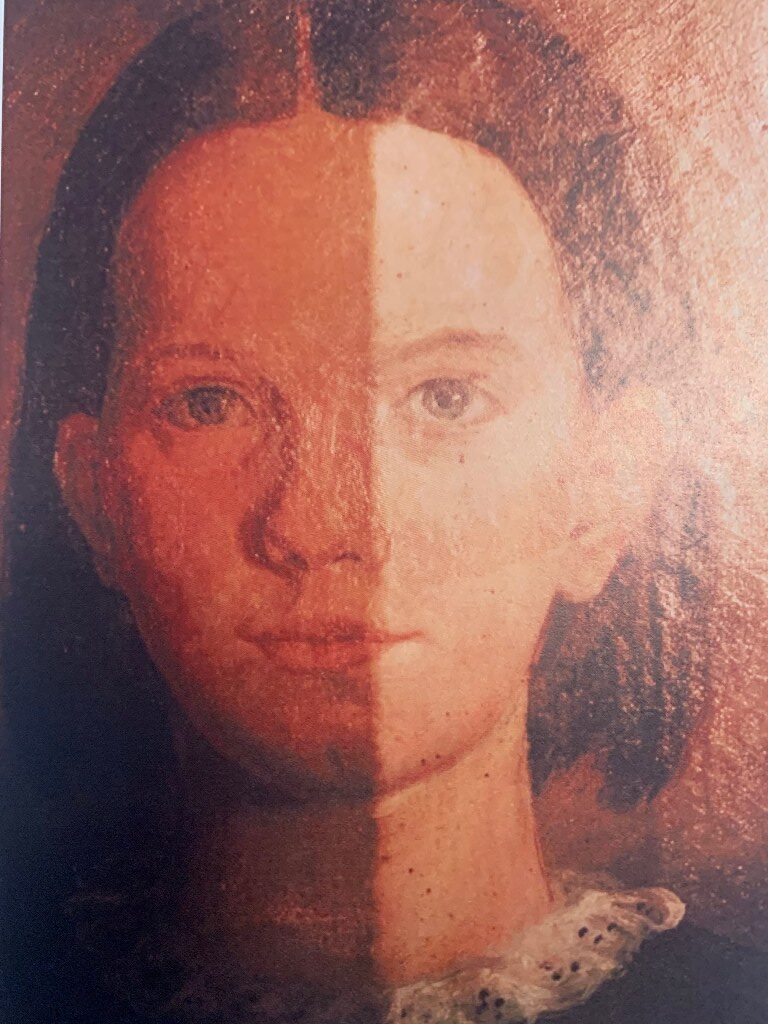
The goal is never to make a piece of art look new. Time leaves traces that are part of the object’s life, a patina that comes from everyday stressors like dust, smoke, grease and sunlight. Clyde says he feels a sense of responsibility to bring back what the artist intended, not impose his own vision.
“I don’t add or take away,” he explains. “I bring it back to its original state.”
That process requires technical knowledge, but also an innate ability to interpret a piece at a deeper level. When something is missing, he studies the work closely, considering what the original artist would have done.
“Every piece is unique,” he says. “I think of the artist as I restore it to how it was, and I’m respectful of their work.”
The pieces retain their material value, but they carry meaning that goes far beyond that. They represent legacy and memory for families, and they will continue to be handed down for generations to come.
“When I restore them, I’m restoring something precious,” Clyde says. “You see the expressions on people’s faces. They have tears in their eyes. I get hugs. It means a lot.”
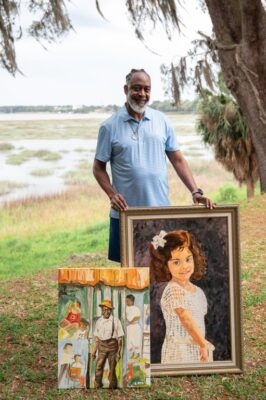
Some of these clients gift certain restored pieces back to him, and he has collected works with special Lowcountry connections. Among them are pieces connected to Joseph “Captain Crip” Legree Jr. (1924-2017) and Thomas “Sam” Doyle (1906-1985), beloved artisans from St. Helena Island’s Gullah Geechee community.
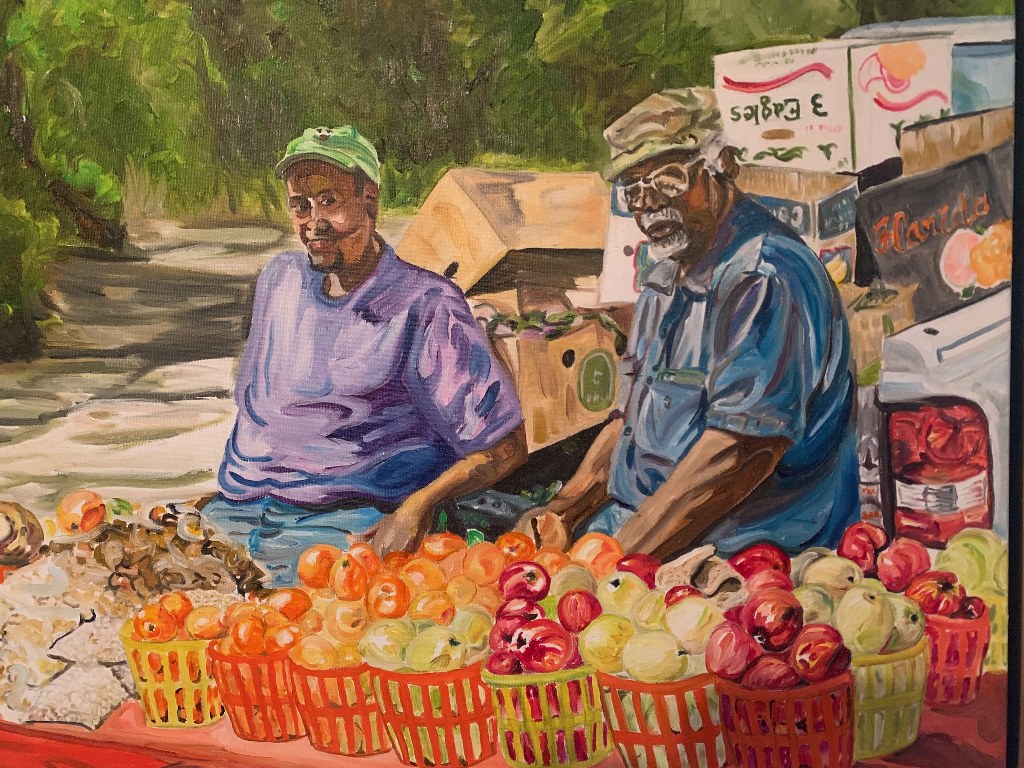
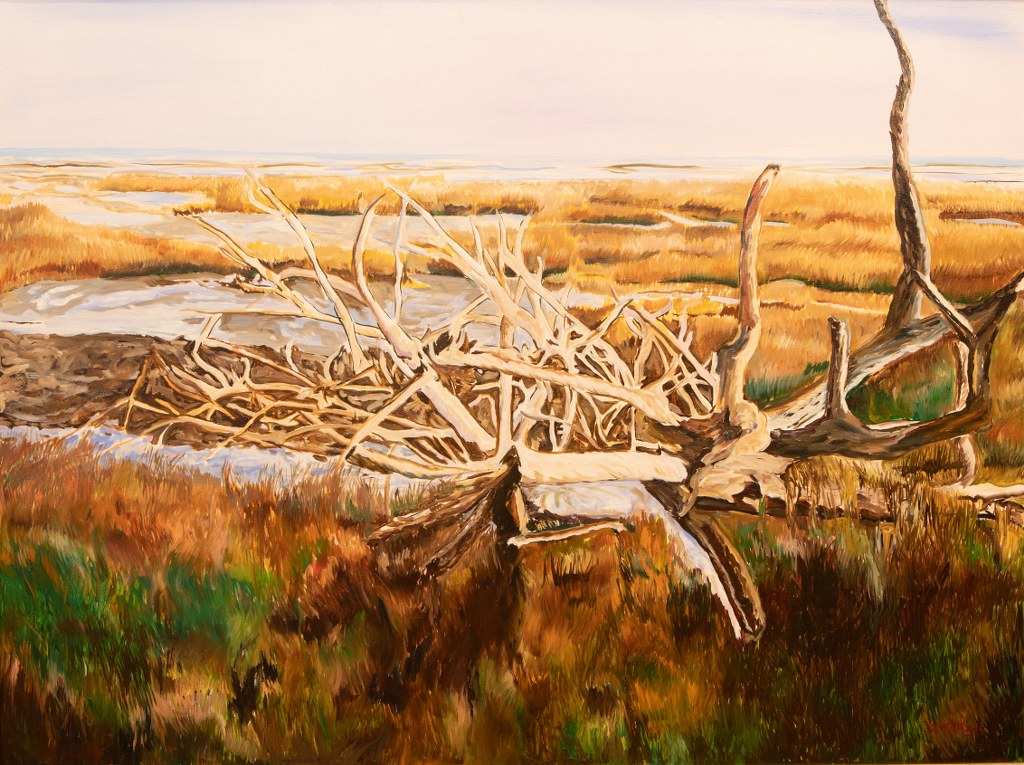
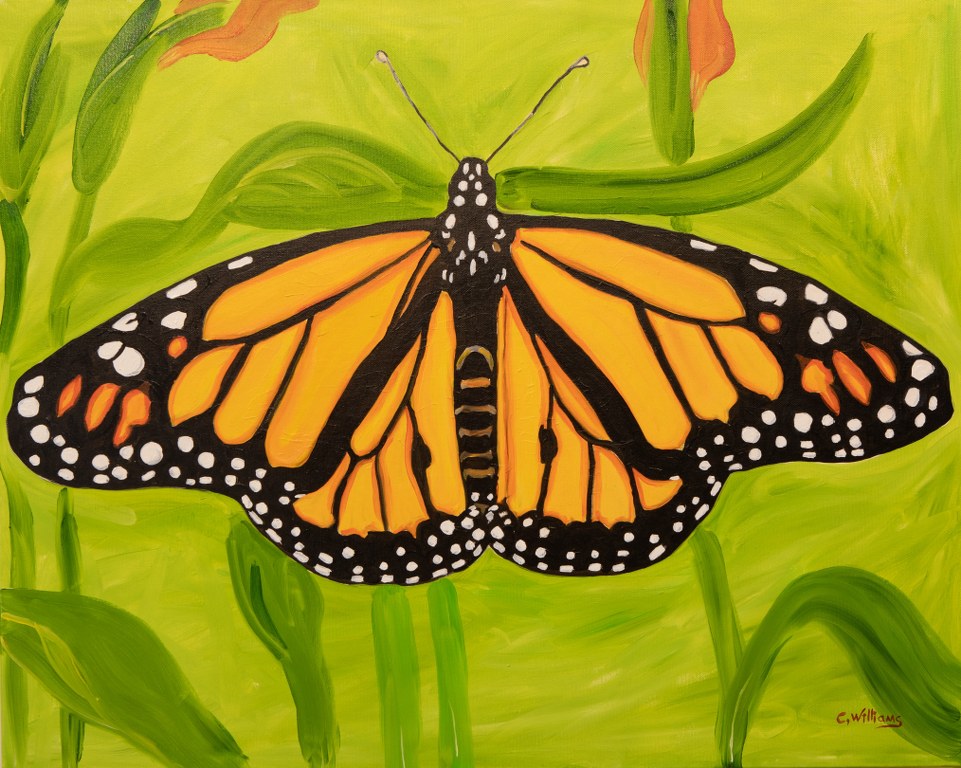
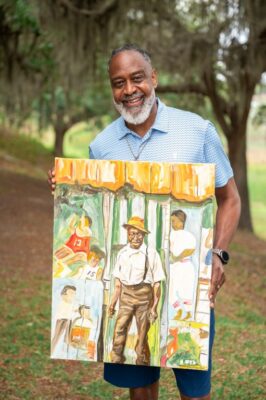 He also continues to create his own artwork, taking on commissions when time allows.
“Portraits are my thing,” he says. “Anything to do with people is my favorite, and landscapes with beaches and driftwood come next.”
And he still loves restoration—even when DIYers bring him pieces that are distorted or further damaged by failed home-repair attempts.
“I have to undo what they’ve done, and then restore the piece the correct way,” he observes with a shake of his head.
Clyde says he never thought this would be his life. As a young man, he thought the culinary world was his future, but that single newspaper ad set him on an entirely different path.
“It’s amazing, what he can do,” Norma says.
Clyde smiles.
“One thing I can’t do is turn back time.”
To learn more, visit artrestorationbyclyde.com or call 843-575-2301.