Lise Sundrla
Preserving the History and Identity of Beaufort and Its Residents
story by JENNIFER BROWN CARPENTER photos by PAUL NURNBERG
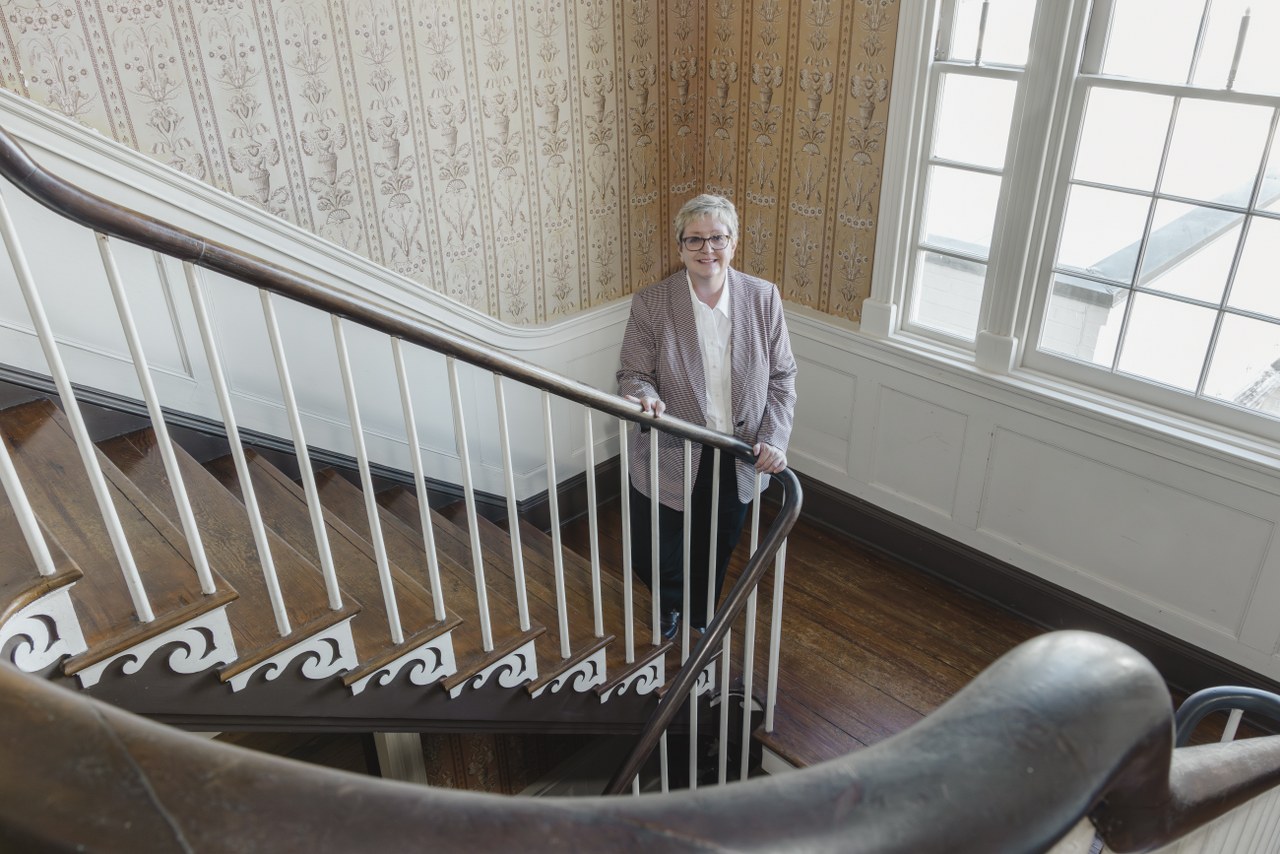
 American sociologist William H. Whyte once said, “The way we build cities, the way we make places, can have a profound effect on what kinds of lives are lived within those spaces.” Lise Sundrla, executive director of the Historic Beaufort Foundation (HBF), is inspired by Whyte’s belief, and it is this belief that fuels her work, as she and HBF continue to focus on preserving the history and identity of the Lowcountry and the people who live here.
“Doing what you can to protect the traditions and lessons of the past is what shapes our future,” Lise says. “You learn from your past. Preserving it offers us tangible lessons. It’s not just about saving the historic structures — it is about our identity, and how that resonates with the community as a whole.”
“We are fortunate that so many historic structures have been saved and preserved over the years in Beaufort. But we can’t forget that there is always a danger of losing some part of that tangible history, and if we do lose that, we are losing a part of what makes us unique. It takes a concerted effort of the whole community coming together, and it takes organizations like Historic Beaufort Foundation, and so many other organizations, being willing to make a difference and to stand up for the past, and how it affects us today and in the future,” she says.
Lise was raised in Spartanburg, with both of her parents teaching at Converse College. Her mother was the head of the Art Department, and her father was the head of the Humanities and History Department. “It was written in stone that I would be going to Converse,” Lise says, laughing. She attended, majoring in Art History and Sociology with a minor in Fine Arts.
Lise’s interest in preservation began with a fellowship to the Summer Institute at the Museum of Early Southern Decorative Arts. Seeking to further her education, she earned a master’s in American History with a focus on Historic Preservation at Middle Tennessee State University, where a hands-on program allowed her to work directly with communities and nonprofits on preservation projects.
Along the way, Lise interned with the Pennsylvania Bureau for Historic Preservation. “Thanks to my parents, I’ve had an interest in history and art my whole life. It was always a part of our lives.” Lise has 22 of her mother’s paintings and sketches framed throughout her home. “My mom is gone now, and when I look at her paintings today, I see her interest in architecture, history, and fine arts. I never really realized that growing up.”
After finishing graduate school, Lise dove headfirst into downtown revitalization, the National Trust for Historic Preservation’s Main Street Program, which was fairly new at the time. She started out in Gaffney, SC, not too far from home. “It was a great opportunity to work with a small town that I was familiar with, and to preserve its history and bring life back to its downtown area.”
From there, she came to Beaufort to direct the Main Street Program here. She arrived in 1988 and left in 1996. It was in Beaufort that Lise forged lifelong friendships and met her soon-to-be husband, John. Many of Beaufort’s signature events and programs were created and honed during those early days. During Lise’s tenure, Main Street Beaufort was recognized with 14 state awards for innovative events, building renovations, and economic development programs. By the time she left in 1996, Beaufort had been named a Main Street Success Story by the National Trust for Historic Preservation and National Main Street Center – one of only 44 in the nation.
She went on to direct revitalization and economic development programs in Winchester, VA, Savannah, GA, and Naples, FL, before moving back to Beaufort in 2017.
It was her work in Savannah that broadened her knowledge and understanding of neighborhood and community redevelopment. Lise headed up the Savannah Development Renewal Authority for 12 years, working with the entire historic district with a focus on Broughton Street and Martin Luther King Blvd. It was in this work where her earlier Main Street interests shifted to community redevelopment. Working with neighborhoods, and business and property owners along MLK Blvd, Lise was now addressing issues and concerns that were the result of the Urban Renewal efforts of the 1950s and 1960s.
“My interests and knowledge evolved from traditional downtown revitalization to understanding the importance of engaging the community to understand the challenges and work toward solutions.”
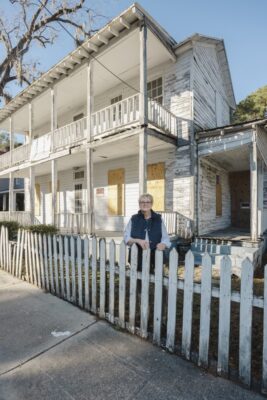 Lise’s return to Beaufort in 2017 sparked a series of significant contributions to the local community’s development and preservation efforts.
Following her return, former City Manager Bill Prokop and then Mayor Billy Keyserling reached out to Lise, leveraging her previous experience to consult on the revival of the Main Street Program in Beaufort. She took on a three-month contract, collaborating closely with city staff, particularly Linda Roper, the director of Downtown Operations. The program was successfully re-established and continues to operate smoothly under Roper’s department.
Lise then played a crucial role in the establishment of the Beaufort Area Hospitality Association (BAHA). This organization was created to provide assistance, resources, and a collective voice for local hoteliers, restaurants, and hospitality attractions. She became BAHA’s first executive director in 2018, a position she held for two years while helping to build the association’s foundation.
In January 2019, Cynthia Jenkins, who was then the executive director of the Historic Beaufort Foundation, asked Lise to come to work with HBF. She accepted the offer and began her work with the Foundation in January 2020, continuing her commitment to the community she and her husband, John, call home. “We always knew we’d return at some point to make Beaufort our permanent home and the timing was right.”
With her background in preservation, nonprofit management, and government, Lise was able to jump right in to assist Cynthia in managing Historic Beaufort Foundation operations, resources, and programs, including the Foundation’s historic house museum, the John Mark Verdier House, and the Foundation’s signature educational and fundraising events – the Winter Lecture Series, Fall Festival of Houses & Gardens, Spring Architects’ Tour, and the Lafayette Soiree.
A critical component of her efforts, then and now, is collaboration with city officials and partners to protect the character of Beaufort’s National Historic Landmark District through zoning and code advocacy.
As a nonprofit 501(c)3, HBF relies on membership, donations, fundraising events, and volunteers to be able to continue its programs. ”We work with hundreds of volunteers a year in addition to our 17-member Board of Trustees and six standing committees.”
Lise was incredibly honored when the HBF Board asked her to take on the position of executive director in June 2025. “Having worked so closely with Cynthia and now following in her footsteps is something I will always be thankful for.” The new position gives her an opportunity to reimagine and to expand the work of HBF.
“We can be more aware and more engaged within our neighborhoods in the historic district. And through the city’s newly formed Historic District Task Force, we can collaborate with residents, city staff, and commissions and partners to help improve properties and assist owners in retaining and maintaining those properties.“
With Lise at the helm, HBF used its Revolving Fund in 2025 to purchase the Mary M. Dunbar House, a circa 1910 structure that had been vacant for over a decade. The Foundation aims to preserve the building’s unique architectural evolution by first stabilizing the building. Once rehabilitated, HBF will decide whether to sell the property with a protective easement or retain it for organization use, ultimately returning it to active long-term residential or commercial service.
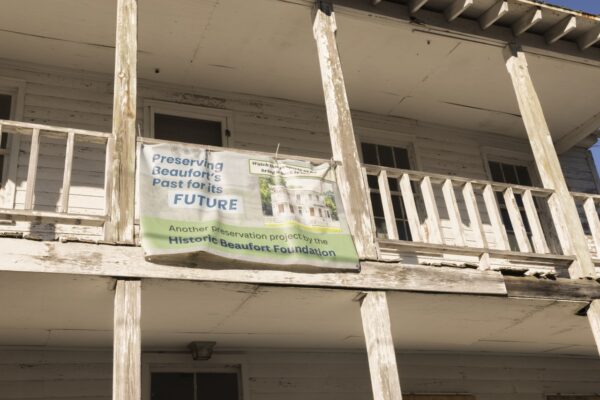
Mary Dunbar (1919-2019) was a remarkable woman who became a successful entrepreneur and community leader during a challenging era, founding and operating Beaufort’s first African American florist — Dunbar’s Florist — where she worked until she retired.
“It’s our hope that the rehabilitation of the Dunbar House will not only preserve Mary’s legacy but serve as a catalyst for further thoughtful revitalization and redevelopment along Charles Street and within adjacent neighborhoods.”
In December, the Sons of the American Revolution, Governor Paul Hamilton Chapter, recognized Lise with the prestigious Martha Washington Medal for her efforts in organizing “an army of volunteers” to celebrate the 200-year anniversary of the Marquis de Lafayette’s triumphal visit to Beaufort in 1825 — an honor that Sundrla believes should include the whole community as hundreds of volunteers and thousands of onlookers, including hundreds of school children, participated in the recreation of that historic visit.
It was the community’s rallying cry in 1944 to save the Lafayette Building (now known as the John Mark Verdier House) that did more than protect one building from demolition. It launched the Historic Beaufort Foundation and ignited Beaufort’s modern preservation movement.
In 2026, HBF will be celebrating the 50th anniversary of the rehabilitation of the house and of its opening in 1976 as Beaufort County’s first historic house museum.
Beaufort is the second largest historic district in South Carolina, and it is something to be proud of. “As stewards in our community, of our history and architecture, it is incumbent on us to listen to the community, to the stories and memories that shaped our history,” she says.
“People sometimes question the value of preservation, especially when they see opportunities for greater development — another hotel, another gas station, another storage unit. I believe you learn from your past and preserving it offers tangible lessons.”
For Lise and HBF, as a whole, their work is not only about preserving historic buildings but also about safeguarding memories, and the history and identity of the people who lived here before us — preserving Beaufort’s past for the future.
If you are interested in learning more about the Historic Beaufort Foundation, their work, or volunteering, you can visit their website www.historicbeaufort.org.