Marion Rollen Chalmers
History, Culture, and Heritage Rice
story by JENNIFER BROWN CARPENTER photos by PAUL NURNBERG
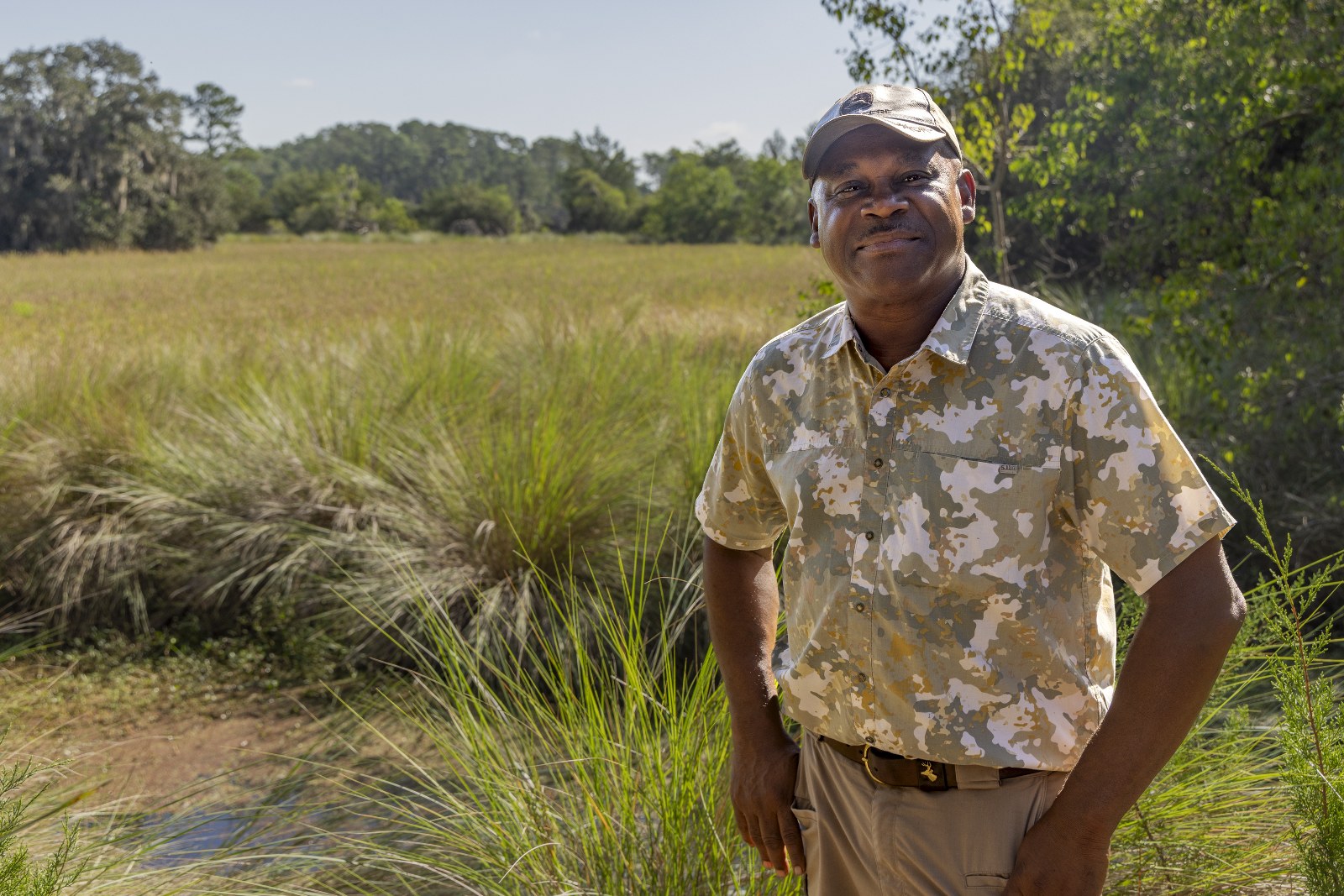
 Marion Rollen Chalmers has always loved being outdoors, whether hunting, land clearing, or planting. In 1996, Rollen founded his business Weed Masters, which focuses on land clearing and management, wildlife food plots, recreational farming services, and more.
As Rollen planted these wildlife food plots, he also started planting rice. “Most people that are interested in duck hunting are interested in rice.”
In the 1980s, Dr. Richard Schulze, Sr., an eye surgeon and owner of Turnbridge Plantation and an avid bird hunter, wanted to reintroduce Carolina Gold rice in order to attract more ducks to his property. He located seeds in a seed bank in Beaumont, Texas, and acquired 14 pounds of Carolina Gold and began to grow it on Turnbridge. Prior to this taking place, Carolina Gold had almost completely disappeared and the last commercial crop had been harvested in 1927.
Dr. Richard Schulze, Jr., who had taken over Turnbridge Plantation, introduced Rollen to his friend Glenn Roberts, an heirloom grain expert and the owner of Anson Mills in Columbia. Glenn wanted to grow the rice for research purposes. Rollen recalls, “Glenn and I met and talked, and we decided to go ahead and get started with planting the Carolina Gold rice at Turnbridge. We started learning about how it would grow at various times of the year, doing all the planning and the planting. We planted Carolina Gold, Charleston Gold, Long Gold, and Black Rice.”
During this time, Rollen was also able to conduct research with scientists at Clemson University, who assisted in the revival of this heirloom grain.
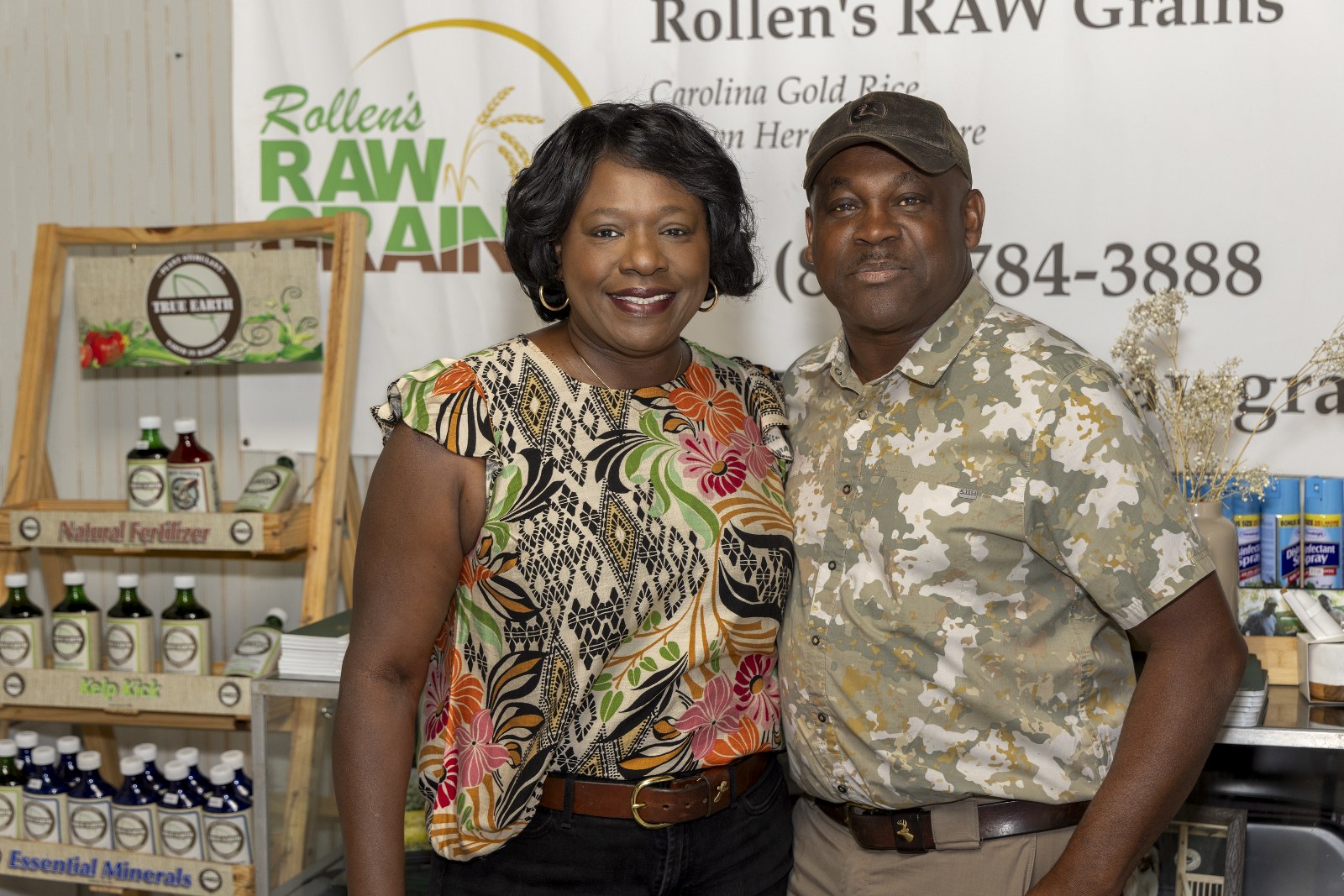
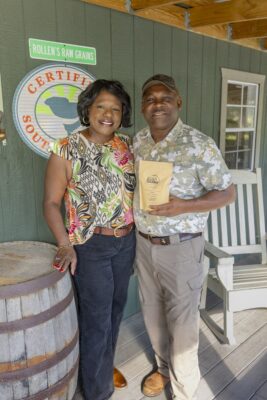
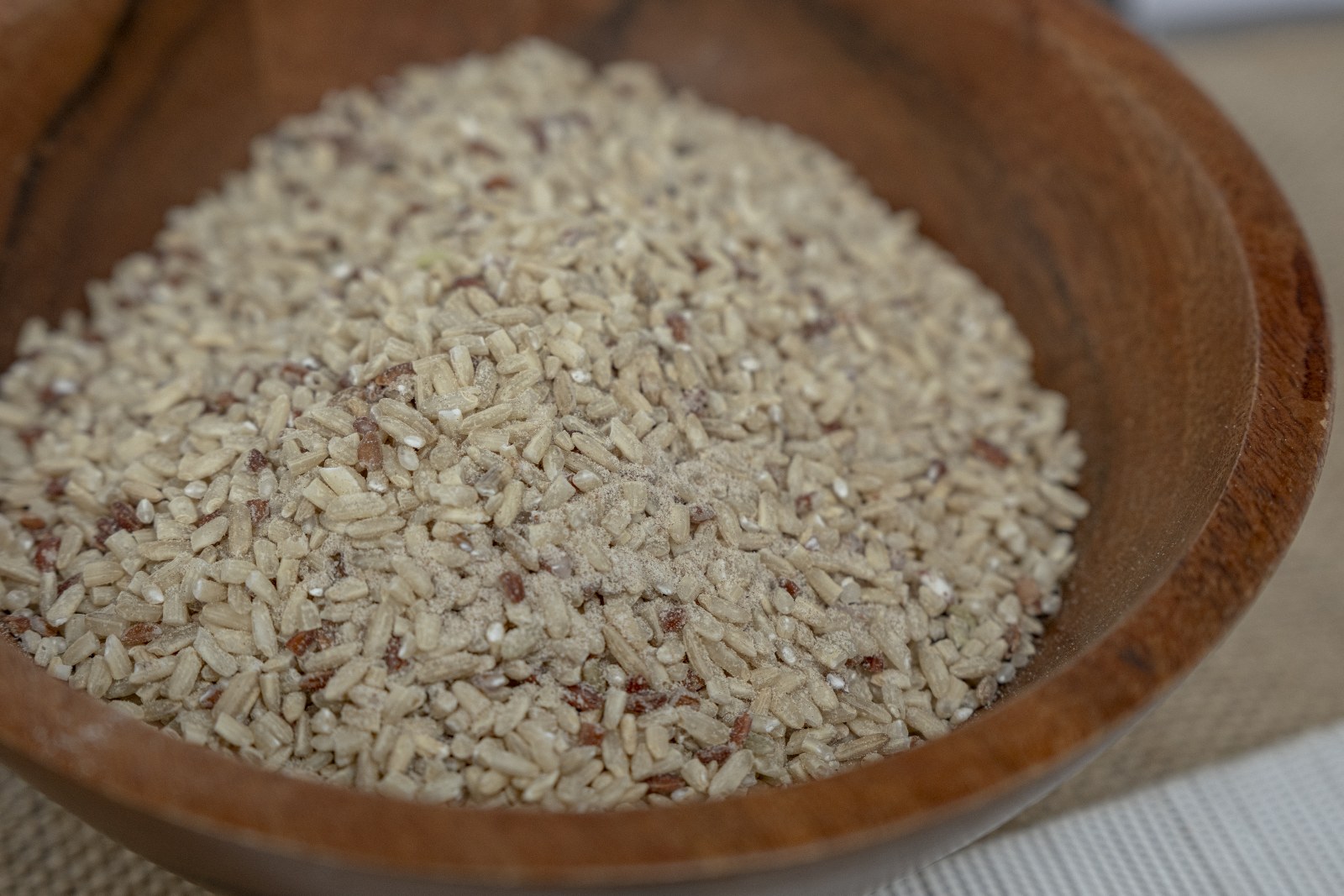
In April 2023, Rollen and his wife, Frances, opened Rollen’s RAW Grains, where they sell Carolina Gold and Charleston Gold as well as a variety of other heritage grains. “We have both a physical and online store. We participate in local farmers markets in the area. We host tour groups as well.”
Heritage rice is a type of rice that was grown in the area years and years ago but for several reasons slowly vanished. Rollen explains, “Heritage seeds produce the tastiest grains or vegetables that a farmer can grow. These are foods that have a pure taste. It is a vital part of our heritage.”
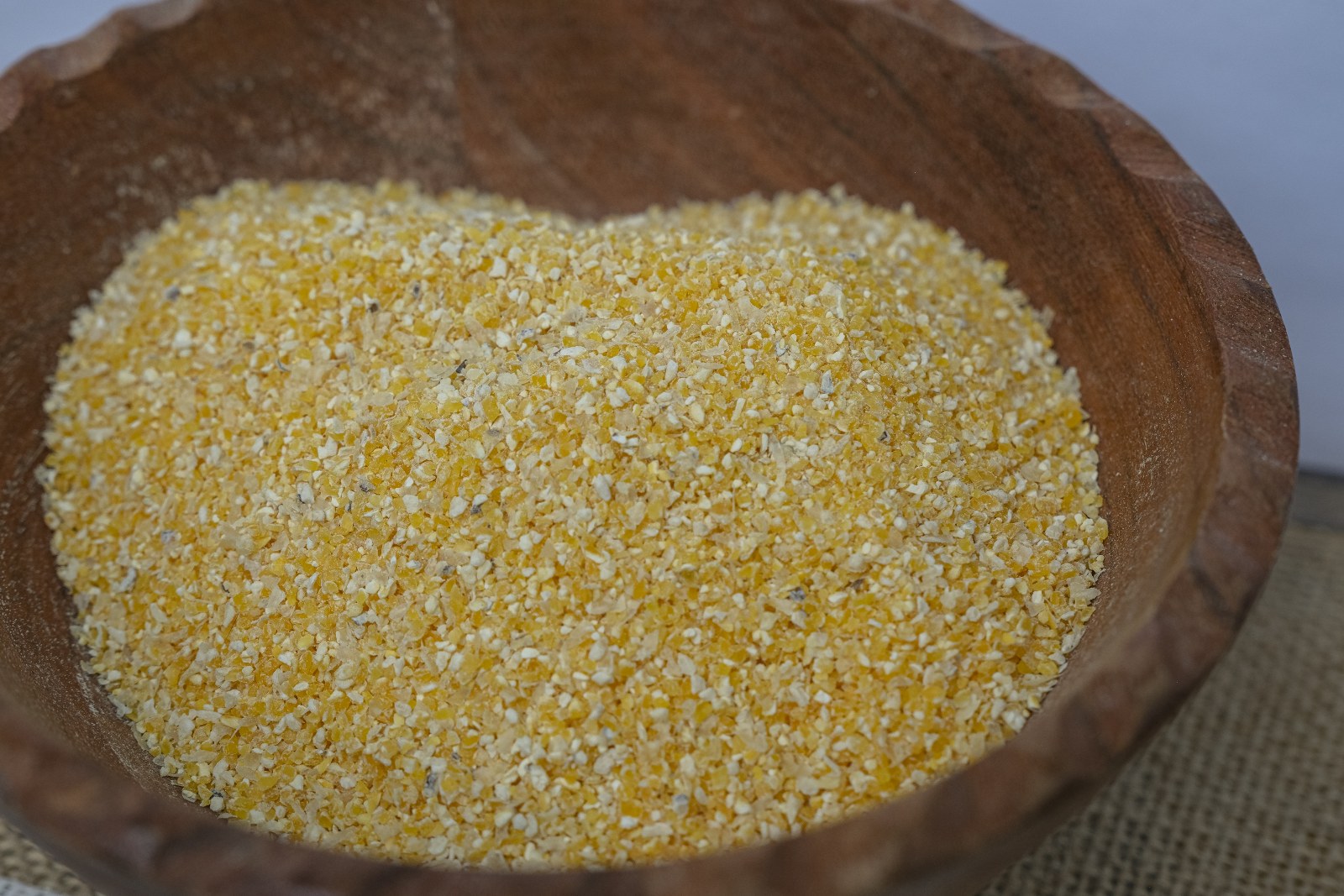
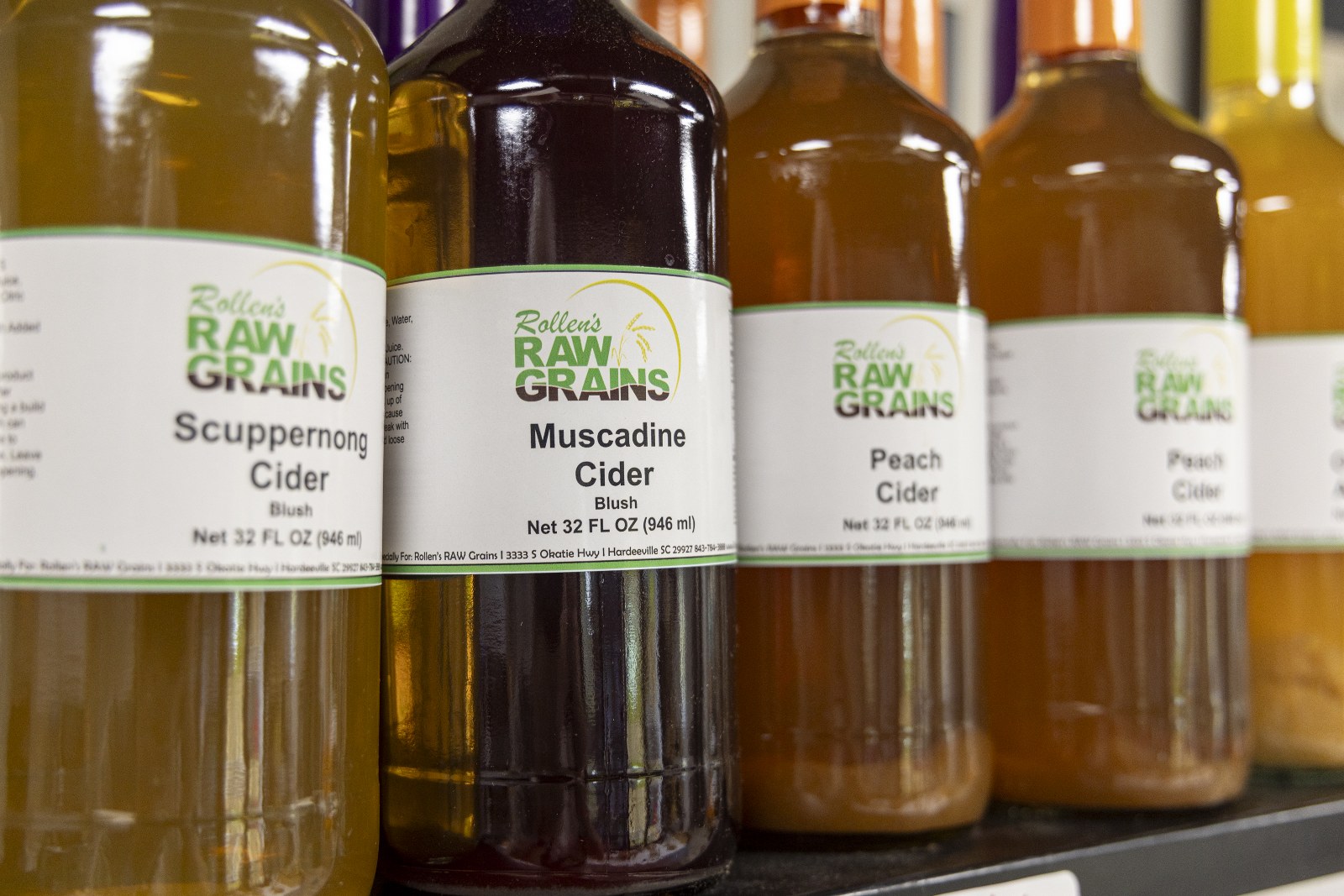
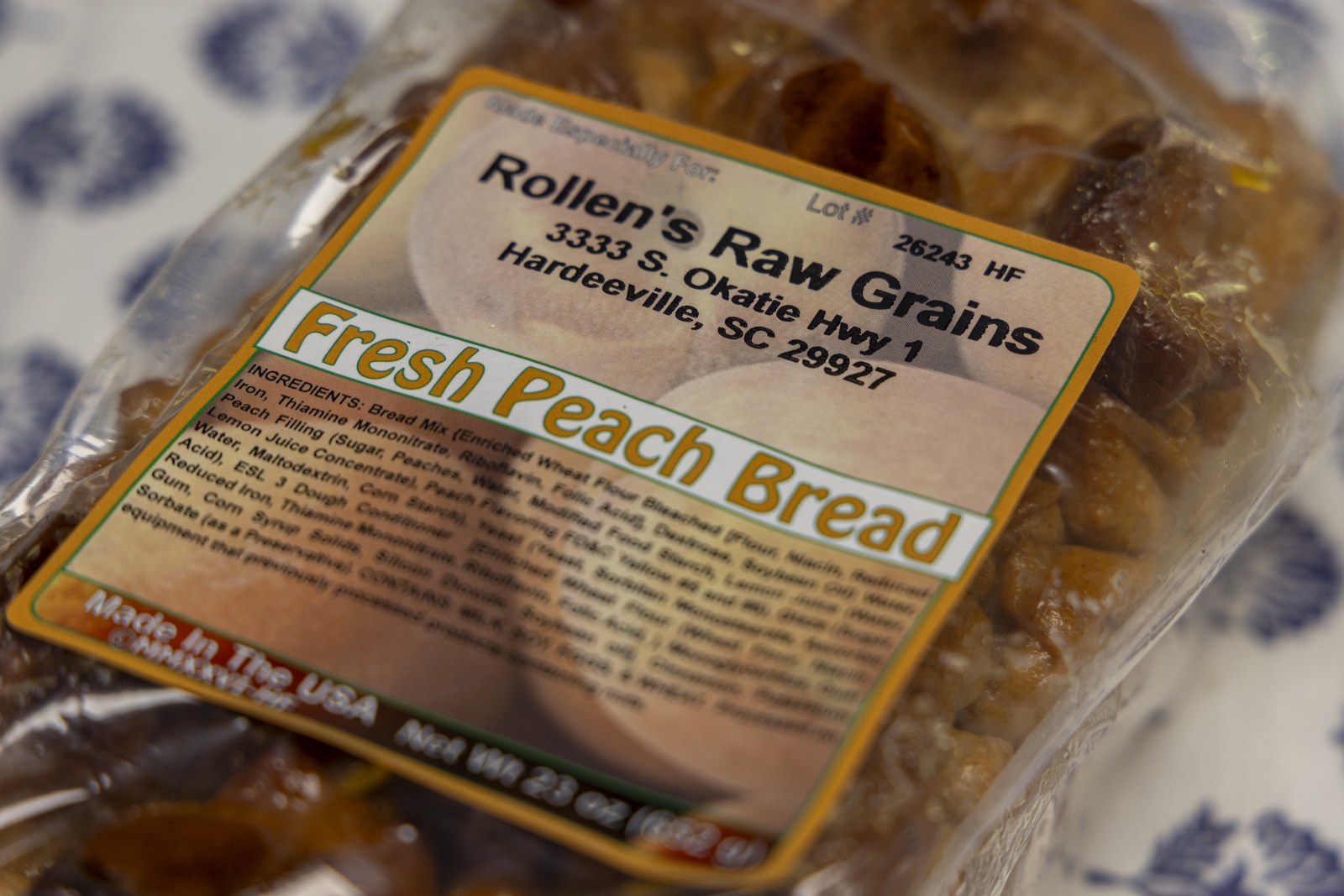
It makes you wonder why such an important part of history, especially Carolina Gold rice with a delicious flavor profile, would be forgotten and not planted for decades at a time. For Rollen, he believes that the labor involved in harvesting the crops is part of the answer. “When Carolina Gold vanished, one reason was because there was no free labor. Also, hurricanes played a part in the struggle of these crops continuing to be grown and produced.”
What Rollen did not know when he originally started on this journey with heritage grains was that his great-great-grandfather had been growing Carolina Gold rice as an enslaved person at Palmetto Bluff in the 1800s. Rollen’s great-great-grandfather was enslaved by a Scottish family, and he grew rice for them. When slavery ended, Rollen’s great-great-grandfather moved out of Palmetto Bluff and worked at a bakery owned by the Coles in downtown Bluffton. He later moved back into Palmetto Bluff, leased land, started growing rice, and sold it for himself. “That was unheard of during that era,” Rollen says. “It is all documented by the U.S. Census.”
Rollen discovered these facts as he worked with an archaeologist, Dr. Mary Socce, at Palmetto Bluff. “I spoke at a gathering about rice cultivation, both now and back in the past, and when I was done with my speech, she and I started talking. She told me that thousands of pounds of rice had been grown at Palmetto Bluff and that she wanted me to come and look around. She took me into a nice cemetery, and when we walked in, I found my great-great-grandparents buried with a nice marble headstone. Apparently, the Scottish family had thought highly of them. That is how I found out everything about my great-great-grandfather and his story. It is a full circle moment for me.”
Opening Rollen’s RAW Grains storefront was especially important to both Rollen and his wife, Frances. “It is doing exactly what we wanted it to do from the very beginning: It is bringing people together,” Rollen says. “We occasionally have chefs there that prepare different grains. I wanted to create an environment where people could enjoy good food, talk with each other, and bring people together from all walks of life. We have had people come in the store from all parts of the United States and all over the world. They have sent us specialty items from their part of the country and elsewhere in the world.” Frances says, “Everyone is welcome here.”
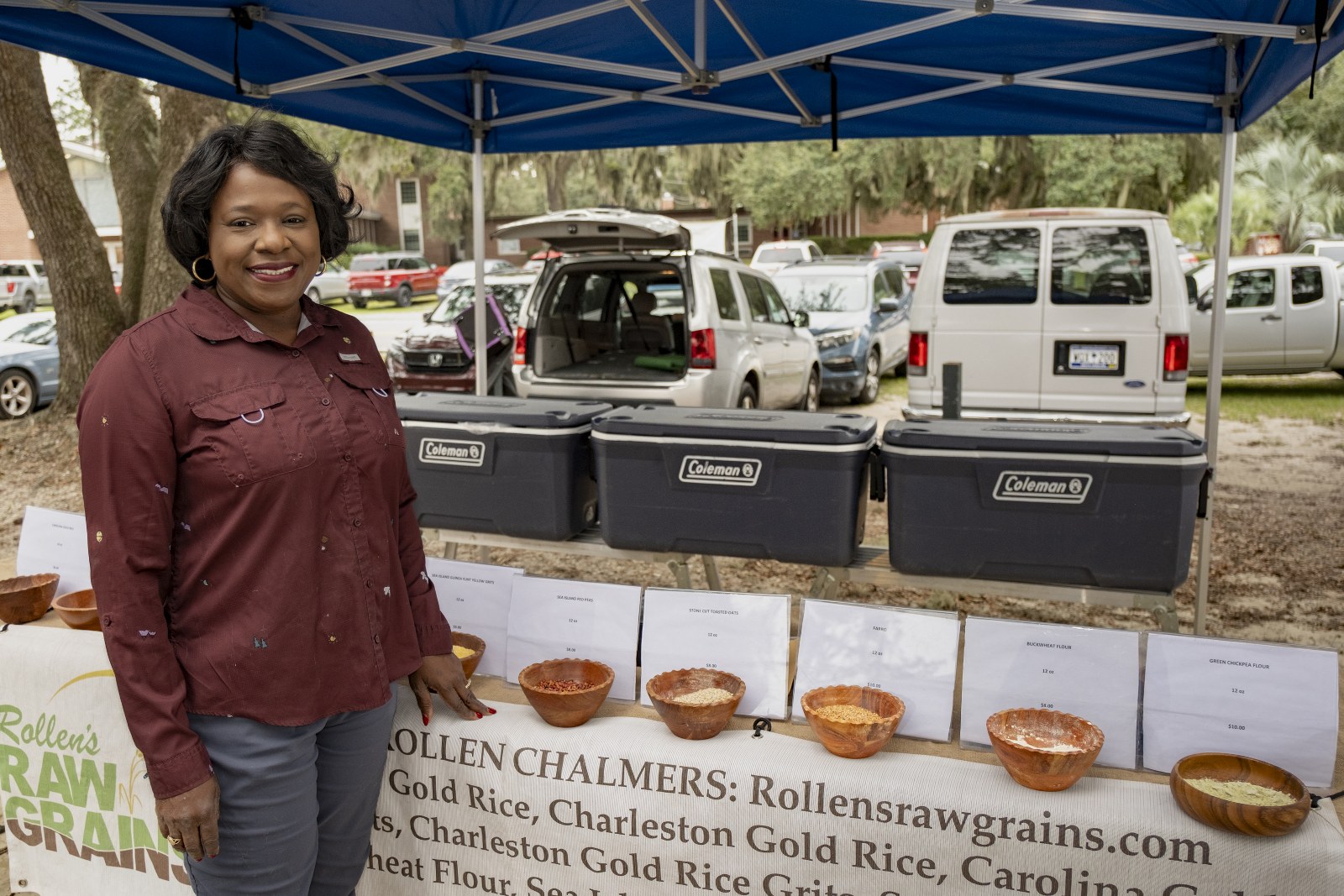
At Rollen’s RAW Grains, you are able to sample unique foods that were in this area over a hundred years ago. “It brings people together. Healthy food always brings people together,” Rollen says. Frances and Rollen are enthusiastic about creating a welcoming environment for their community and for people traveling. “That is how we live our lives; we have many family and friends that have helped us along the way, and we are grateful for all of them,” Frances says.
Recently, Rollen took part in the University of South Carolina Darla Moore School of Business Leadership Reception. The theme was Cultivating Enduring Value. The event included South Carolina leaders and focused on business growth, creation, and sustainability. Rollen told his story involving Carolina Gold rice, and Dr. Kealy Carter, Ph.D., founder of the Darla Moore School’s Center for Sustainable Growth, shared how innovation and responsible stewardship can create lasting value. The following day, the group enjoyed a tour of Rollen’s Carolina Gold and Charleston Gold rice fields. This tour included an outstanding living historian, Thomas McNeil Rose III, who also presented Rollen and Frances with a rare newspaper article from The Liberator from 1864.
Rollen has been acknowledged by the International African American Museum in Charleston and presented with the IAAM Culture Award. Rollen was recognized for his work in preserving the stories, traditions, and all the people who have shaped his culture. “I was shocked. I go out there and do the things I do, and I do them from the heart. I am not doing them to be recognized, but I appreciate and I am grateful for this prestigious award from IAAM,” says Rollen.

Rollen and Frances are supported by great people who help them in the store and at the farmers markets. “We have worked our way through several of our nieces and nephew at the Port Royal Farmers Market and Rollen’s RAW Grains storefront. One is now at the College of Charleston, one is at the University of South Carolina, one is at South Carolina State University, and the last one is at the South Carolina Governor’s School of Agriculture. They are all doing quite well,” Frances says. Rollen and Frances’ nieces, nephew, sisters, in-laws, and other family and friends have all been a tremendous help in their growth. Rollen and Frances have one daughter and son-in-law and an inspiring granddaughter.
Rollen and Frances hope that people in the community will know that they are enthusiastic about the work they do in both growing and producing crops that will continue for years to come. “We put all of our passion, heart, and soul behind providing the people in the community and everywhere the opportunity to purchase the best grains,” Frances says.
Rollen and Frances have their storefront open Tuesday through Friday from 10:00 a.m. to 5:00 p.m., and on Saturday from 10:00 a.m. to 3:00 p.m. They are regularly at the Port Royal Farmers Market. To learn more about Rollen, Carolina Gold rice, and the work that the Chalmers are doing in the community, you can visit www.rollensrawgrains.com