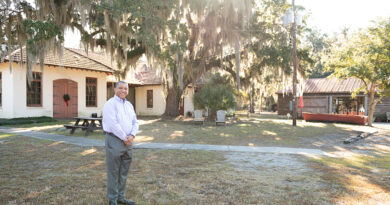
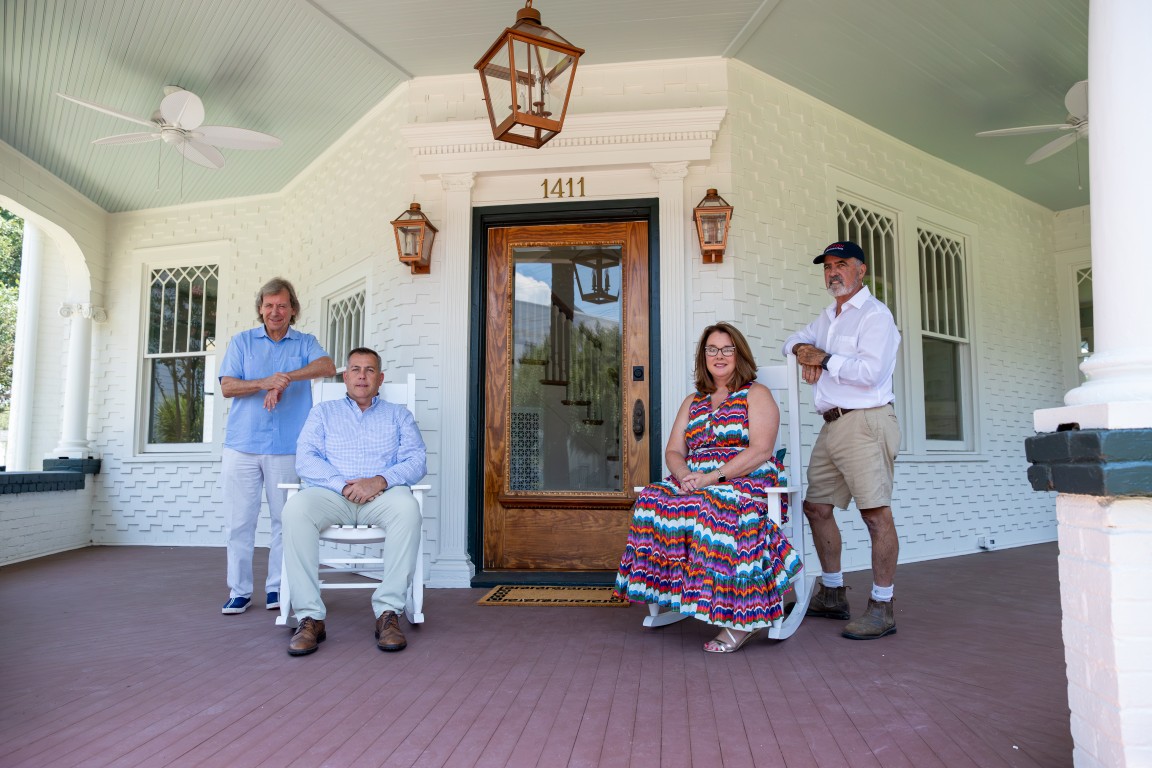
Steve Goggans and Mike Sutton
PRESERVING BEAUFORT’S RICH HISTORY
story by JENNIFER BROWN CARPENTER photos by SHAWN HILL
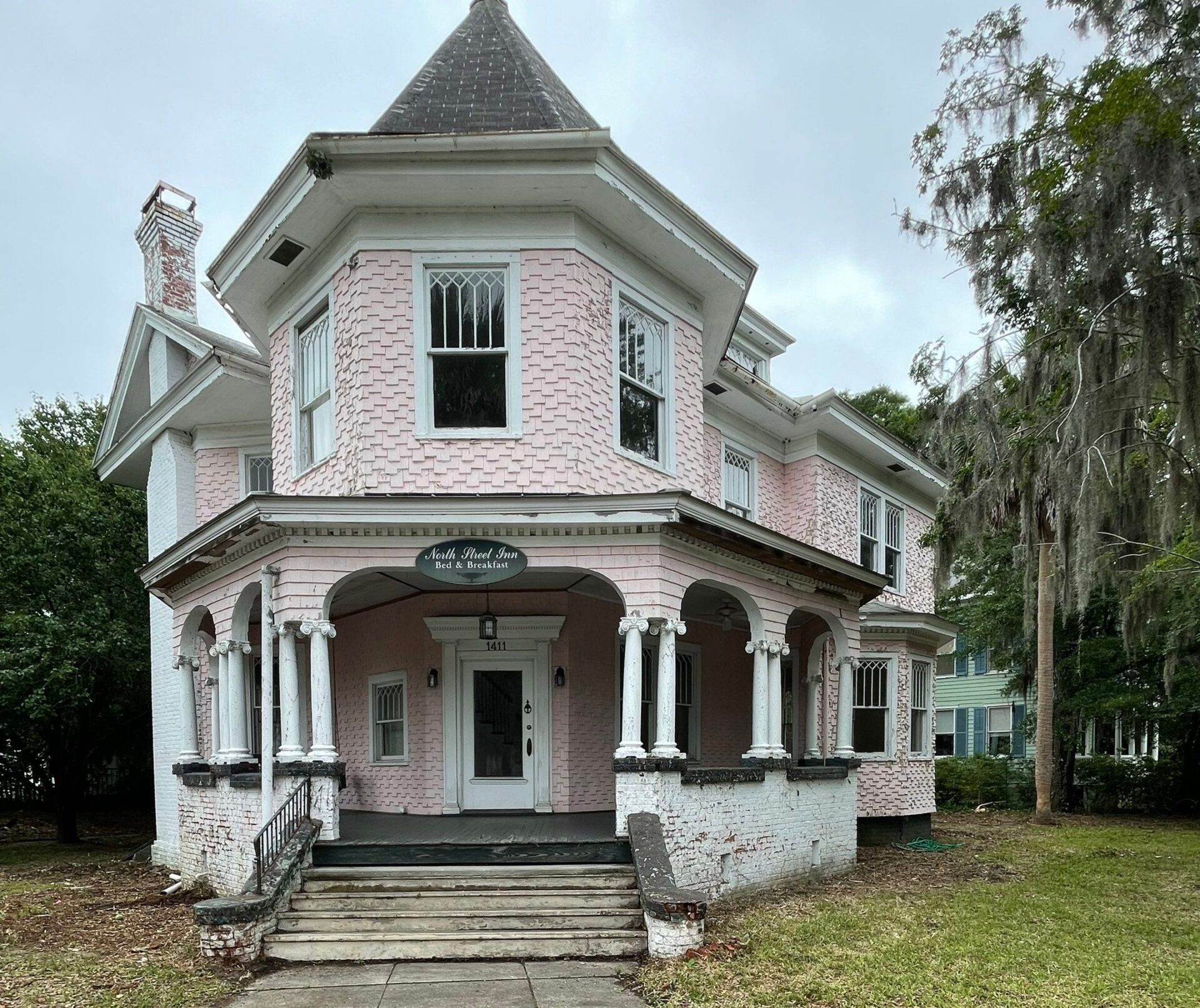
Over the last year, the restoration of the 1411 North Street Inn, also known as the Emil E. Lengnick House, has been completed. This beautiful 120-year-old home has passed through several owners, serving as a private residence for almost a century. In 2000, the home was purchased and opened as a bed-and-breakfast in 2001 before becoming formally known as the North Street Inn in 2002.
Steve Goggans, owner of Goggans Architecture, has over four decades of design experience. About three years ago, Steve purchased a home on North Street. That house went through a small restoration and renovation that Steve undertook with the help of Mike Sutton. It was about a year-and-a-half-long process. “During that time, I really came to value Mike’s work; he is a real preservationist when it comes to his contracting. That is pretty rare. He not only understands historic materials and sustainability but has good approaches and strategies when it comes to the guidelines necessary for a home to be used in our present-day,” Steve says.
After completing the renovation and restoration of his own home on North Street, Steve started looking for another project to take on, with the help of Josh and Dawn Yerace, agents at Lowcountry Real Estate. “We wanted a project where we could make a real difference to the home but also be able to have a profit margin so that it was business viable,” Dawn says. “And during this time that we were looking for a project, Steve would comment on the old North Street Inn and how he could tell that the house was falling to ruin. It just so happened that the house went on the market on a Friday night, we toured it immediately, and put an offer in right away. It was so exciting,” Dawn says. Dawn, Mike, and Steve became a team, spending time discussing plans and what needed to be done. They closed in the spring 2025, and for the last year, their plans have been unfolding.
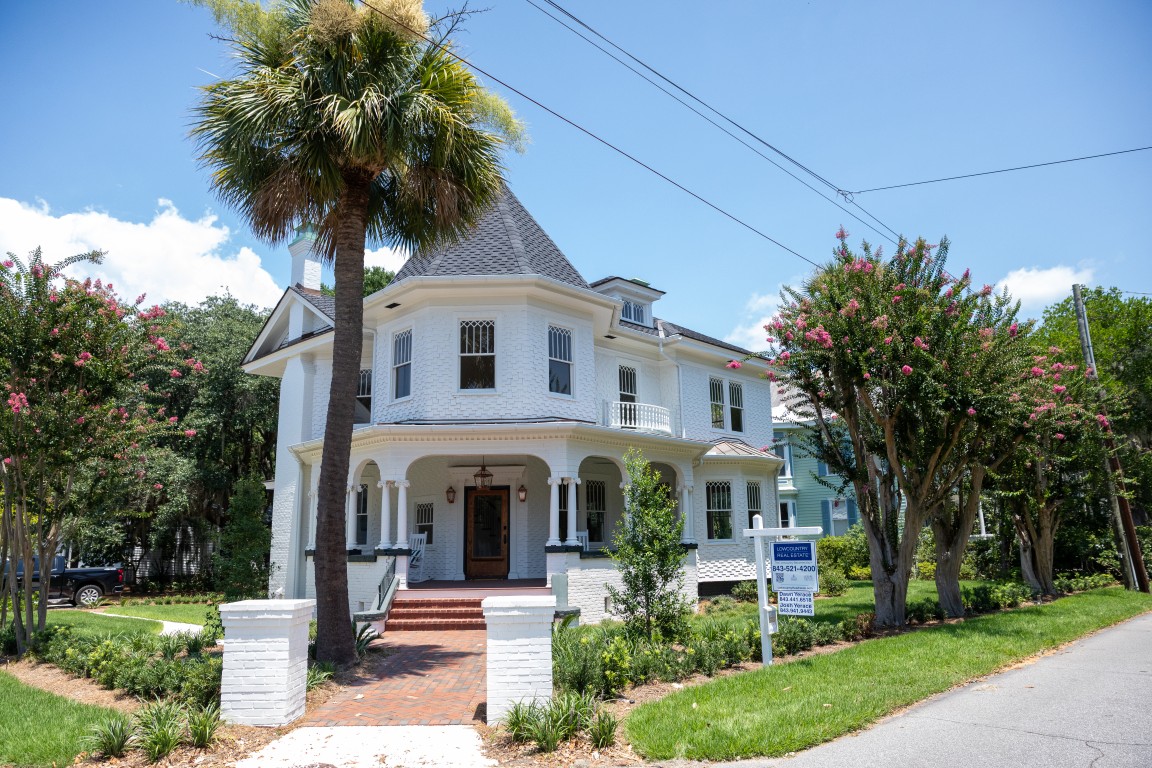
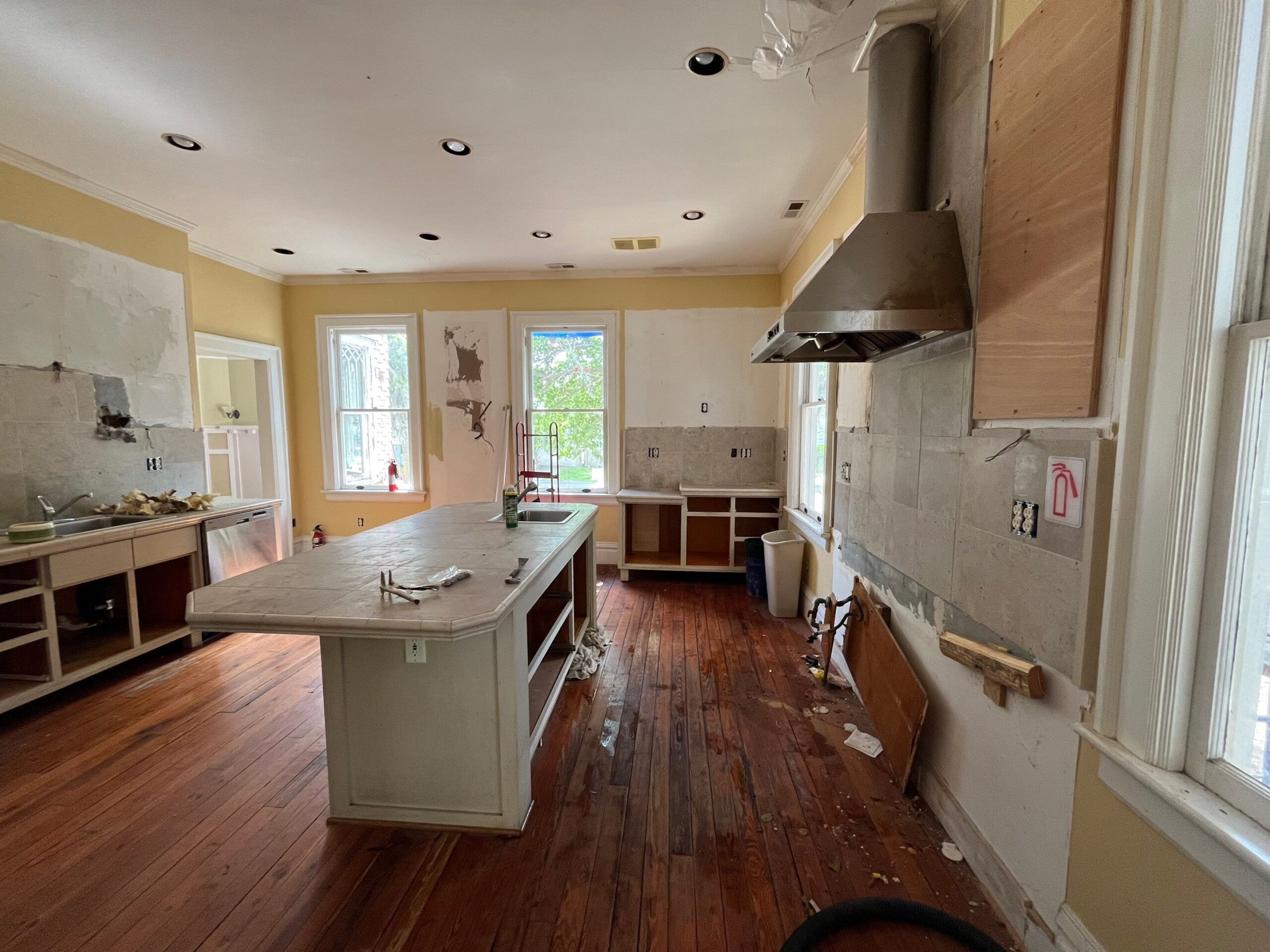
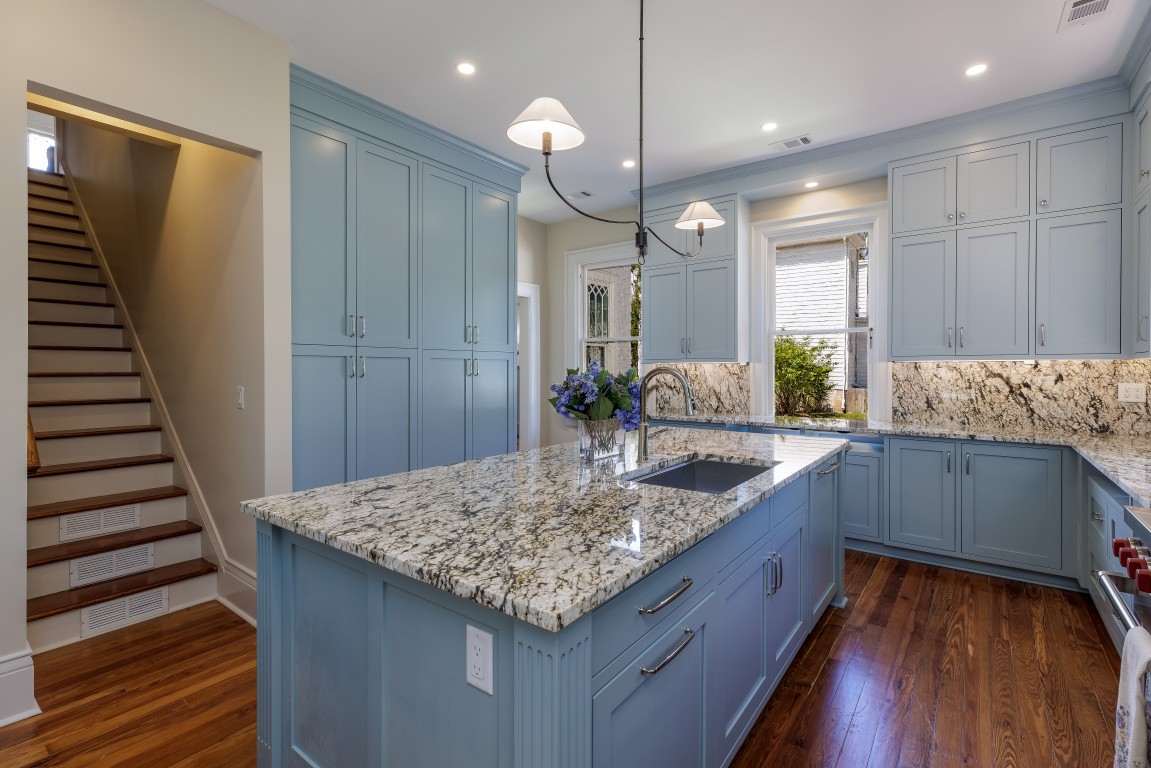
“We made upgrades where we felt like it was called for and where the house deserved it,” Steve says, with the goal being to convert the house to a fine home. They added bathrooms and made the existing bathrooms more functional, so that most bedrooms are ensuite. They also rebuilt the kitchen. Dawn was able to bring her perspective as a real estate agent to this project: “You have to have a bathtub somewhere in this house,” she laughs. “I was able to help them understand what would matter to a modern buyer, while Mike was able to do what he is best at — preserving the history.”
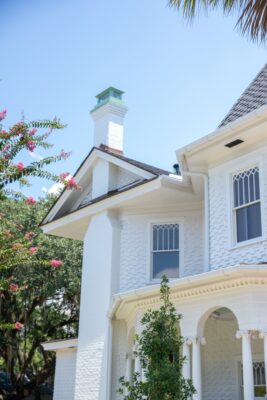
Fourteen eleven North Street required restoration, especially after a few years of water damage following a hurricane that knocked down one of the chimneys. “I felt as if I had the right resources to take on this project, and since the house is on my block, there is nothing like neighborhood pride, right?” Steve Goggans said. “I love architectural history and am a history buff, so for those reasons, I was compelled to take this particular project on.”
In addition to simply restoring the house, the team knew that they wanted to transform it in other ways. They wanted the house to be able to be used for many years to come. “Since I do not have any aspirations of becoming an innkeeper anytime soon, the best option was turning 1411 into a very fine home,” Steve laughs.
The goal of creating a fine home that would accommodate a modern lifestyle in a historic context came with its challenges and hard work. “We tried to be authentic and true to the fabric of the house,” Steve says. “The flooring was 2 ¾-inch pine flooring, so we had to source those materials from afar. For the doors, which are 6 raised panel pine doors and really rare, we had to hit up salvage yards. Restoration is not just a matter of going down to the local hardware or building supply store and grabbing what you need. A lot of it requires research and locating these materials.”
Steve says a lot of the credit goes to Mike Sutton. “Mike actually sculpted replicas out of clay for the Ionic capitals on the columns out front.” For Mike, this is the type of work that he has been doing for many years. He and his team have worked on 109 restoration projects total in Beaufort since 2008. “My love for historic preservation goes way back,” Mike says. “Fourteen eleven is one of the more significant projects we have done, and one of the more significant saves we have participated in. Thankfully for Beaufort, Steve Goggans was able to do things a lot of other people might not have done. This was a full, comprehensive restoration. This house is almost one-of-a-kind. The degree of design and detail on these older homes is much more involved than on modern homes. My team is not working on standard, cookie-cutter homes, that is what’s fun about it.”
The house is one of the few examples of Queen Anne architecture in Beaufort, one of several Victorian architectural styles that were popular in the United States from 1880 to 1910. This house, built by Beaufort merchant Emil E. Lengnick in 1907, is believed to be the only historic residence in the city that is clad almost entirely in wood shingles. Lengnick was also a prominent city leader and was very invested in the city of Beaufort during turbulent times. He served as the chairman of the Beaufort County chapter of the American Red Cross. Lengnick’s wife, Lena Wood Lengnick, became a local historian, preserving stories of Beaufort’s historic homes, families, and traditions in her 1936 paper titled Beaufort Memoirs. Together, Emil and Lena Lengnick not only built an important Beaufort home but also helped preserve Beaufort’s rich history.
There are two parlors in the house, which were typically used as his and hers parlors, or for courting purposes during the Victorian era. “Even though the house was built at the turn of the 20th century, it still has many of those Victorian features,” Steve says. “This house is probably one of the first in the area to have an attached kitchen with a woodstove in it. It also has a formal staircase as well as a servant’s staircase that goes all the way to the third level of the home. It is also one of the few homes in the Lowcountry that has a basement, most likely originally used for coal storage.”
 Four of the five fireplaces in the home were restored. “We were running out of space and so we covered one of the fireplaces. We did not demolish it, just covered it so that in future years it can also be restored if desired,” Steve says.
“What is key to Beaufort’s identity is our historic homes and our history. People come to Beaufort because it doesn’t look like anywhere else. We have these historic homes that amazingly did not all get demolished,” says Dawn Yerace. “This project at 1411 was not a renovation, it was not taking an old home and changing it all to fit your personal needs. They took everything that was historic about the house, and they made it work again. It was a true preservation. Every single window is the original window, and they are functional,” she says. “This is a 120-year-old house, and the original windows work. That is amazing. Steve has stewarded this project so well, and hopefully the next owners will steward it well for the next 100 years.”
”These are not new homes, and that is the biggest challenge for anyone buying one of the projects. You can’t treat it like a brand-new house. These homes didn’t have air conditioning or indoor plumbing when they were built. Things have changed. With this particular house on North Street, it was one of the first indoor kitchens built in Beaufort. They didn’t have counters and sinks as we do now. We bring these things into the homes when we do this work, and we do our best to not disrupt the fabric of the home,” Mike Sutton says. “We care about the exterior and want the feeling to be intact for the setting. We want them to represent the time period. This home is built in the perfect setting. The original builders really understand the city they were living in and they built these homes to last.”
“This is not the only house that needs some love, and I hope that this shows people that these homes can be saved. If you put the time and the right principles in place, this history can be preserved for many years to come,” Dawn says. The house has the ability to be a stunning and extraordinary private residence, and still holds the potential and possibility of serving as a boutique inn in the future.
Whether you know the house as “The Pink House” or the “North Street Inn,” 1411 North Street is an important part of our history in Beaufort, and sitting in its place high on The Bluff, it continues to provide a pretty picture of where we have been and where we are going. We are optimistic that the Emil E. Lengnick House will find a buyer who appreciates the quality of restoration and will be a good steward of its history.