Lowcountry Master Gardeners
MAKING IT GROW IN OUR COMMUNITY
story by JEANNE REYNOLDS photos by SUSAN DELOACH
Growing up in southern New York state, our home had an apple tree on one side and a lilac bush on the other. The tree, a remnant of an orchard once on the property, was perfect for my father and brother — both avid golfers — to take turns hitting lob wedges over to each other, while the immense (and immensely fragrant) lilac bush doubled as a playhouse for my toddler sister.
Now living in the South Carolina Lowcountry, apples trees and lilac bushes are no more than fond memories — because neither could survive the unique sub-climate that’s been attracting human transplants in ever-growing numbers.
“This area is unique,” says Victoria Bergesen, a Beaufort resident for the past dozen years and a Master Gardener since 2016. “We’re different from any other place, even in South Carolina. It’s specific to Beaufort.”
Credit (or blame) the salt marshes, she explains, which raise our humidity and create warmer winters and cooler summers. That mild climate is also the reason lilacs, apples, peonies and other northern favorites just don’t work in our gardens.
“Many of the favorite landscape plants in other areas die here,” she says. “It doesn’t get cold enough for the plants to go dormant, and they get exhausted. Citrus and tropical plants do well here, but they have challenges, too, especially for people with no experience with them.”
Although not a Lowcountry native, Victoria has been cultivating her green thumb for decades. “I moved to New York City to study English literature at NYU when I was 18,” she recalls, “and suddenly found myself living where there were no plants. So I started with houseplants.”
That interest eventually led to deep involvement with National Garden Clubs Inc., but Victoria’s career as a freelance writer and book author kept her too busy to take the Master Gardener course then. She began visiting the Beaufort area when her mother retired here in the mid-1990s, then relocated from Ohio in 2014. The move provided the opportunity for Victoria to finally pursue the Master Gardener certification and join the Lowcountry Master Gardener Association. Since then, she’s also added a South Carolina Native Plant Certificate to her resume.
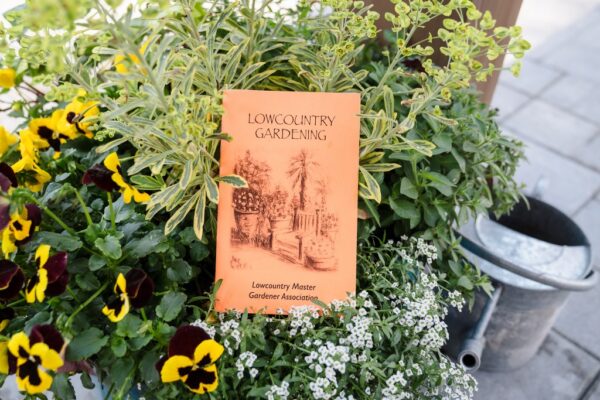
That garden path is open to other Lowcountry residents who want to learn more about gardening in our area, but there are other ways to tap into the vast knowledge of the Lowcountry Master Gardener Association, including Rent-a-Master Gardener and free lunch and learn programs.
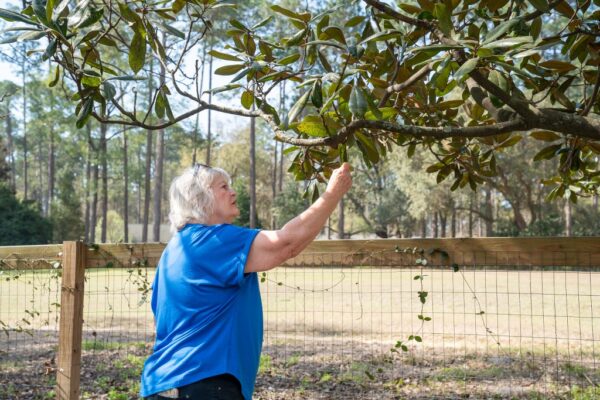
5 tips for successful gardening in the Lowcountry
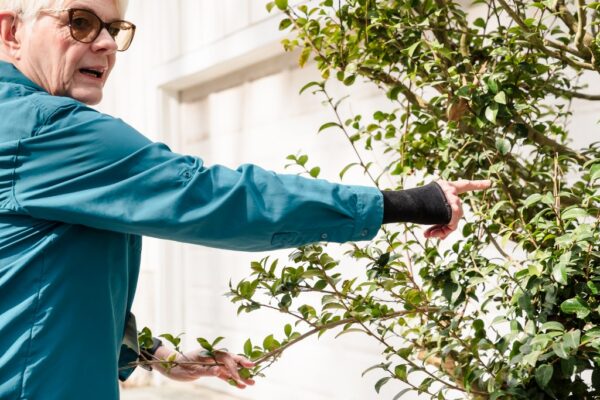
With a dozen years in the Lowcountry under her gardening tool belt, Master Gardener Victoria Bergesen knows a lot about the prizes and pitfalls of gardening in our area. Here are some of her top tips for a landscape you’ll love:
1. Choose the right plants for our climate. Peonies, lilacs and apple trees are lovely, but they don’t love our weather. Learn what can thrive in our warm, humid climate.
2. Choose the right varieties of plants for the location where you want to plant them. Take loropetalum for example. Also known as Chinese fringe flower, this versatile shrub has become popular for its dark purple foliage and fuchsia flowers — but it can grow to up to 15 feet tall and nearly as wide. “It can be surprising how quickly and how large things get,” Victoria says. One solution is looking for dwarf species of your favorites. (Hint: They may be available in different colors, too, such as creamy white loropetalum.)
3. Don’t plant too close to your home’s foundation. Victoria advises leaving two to three feet between the foliage and the foundation to allow room for air flow and easier maintenance. Closer plantings can lead to mold and mildew, she says.
4. Be realistic about how much time and money you want to spend. “Some people actively want to garden, some want a low maintenance landscape, and some are on a tight budget,” Victoria says. Consultation with a Master Gardener through the Rent-a-Master Gardener program can help create the best balance of resources.
5. Don’t feed the deer. At least, not on purpose. “Deer are the biggest problem for many gardeners,” Victoria says. “The rapid development in this area is encroaching on their habitat, and they’re hungry.” Solutions can include focusing on less-enticing plants — think rosemary, tea olive or lantana — or investing in fencing and frequent sprays. But be forewarned: “We can never say deer will never eat something,” she adds.
Lunch and Learn at the Port Royal Farmers Market
Want to attract more birds to your garden? Create an oasis of wonderful scents? Build your own greenhouse? Bring a folding chair and meet by the Gazebo in Heritage Park on Saturdays at noon for tips on these topics and more from our local Master Gardeners. All sessions are free and you don’t need to register in advance.
April
4 Welcome birds to your garden
11 Home improvements for lawns
18 The scented garden
25 What are those wily weeds?
May
2 Home Greenhouses
9 Free plants! Vegetative propagation
16 Plants that thrive on neglect
23 Ornamental grasses and sedges
30 Summer gardening
DIG DEEPER: HOW TO BECOME A MASTER GARDENER
Master Gardener programs first bloomed more than 50 years ago as train-the-trainer programs offered by the county extension services of land-grant universities to meet an overwhelming public demand for home gardening information. Half a century later, Master Gardener programs blanket the U.S., with approximately 85,000 Master Gardener volunteers who have contributed at least 3 million hours of service valued at more than $74 million.
Our local Master Gardener training course is offered through Clemson University’s Beaufort County Extension Service. The 40-hour curriculum program includes education and training in topics such as soils and plant nutrition, basic botany, entomology, plant pathology, vegetable and fruit gardening, landscape design and plant selection. The program consists of approximately 14 classes and two field trips. After completing this rigorous course of study and passing a final exam, participants must contribute 40 hours of educational volunteer service to become certified as a Master Gardener.
Graduates of the Master Gardener training are invited to join the Lowcountry Master Gardener Association, a nonprofit organization that provides continuing education for Master Gardeners and support for Master Gardener projects throughout Beaufort, Colleton and Jasper counties. Members enjoy interesting speakers at membership meetings, classes, day trips, tours, volunteer opportunities and other activities.
Visit http://www.clemson.edu/extension/mg/ to learn more.
RENT-A-MASTER GARDENER
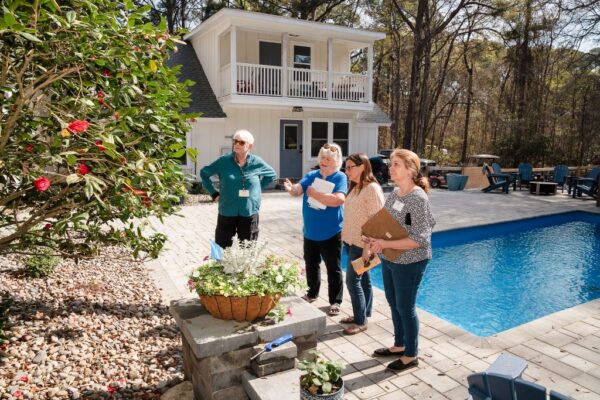
Gardening in the Lowcountry can be a mystery, especially for the many newcomers to the area. Whether you’re sprucing up an existing landscape or starting from scratch, it can be hard to figure out when and where to plant what in our unique climate. The Lowcountry Master Gardener Association can help through its Rent-a-Master Gardener program.
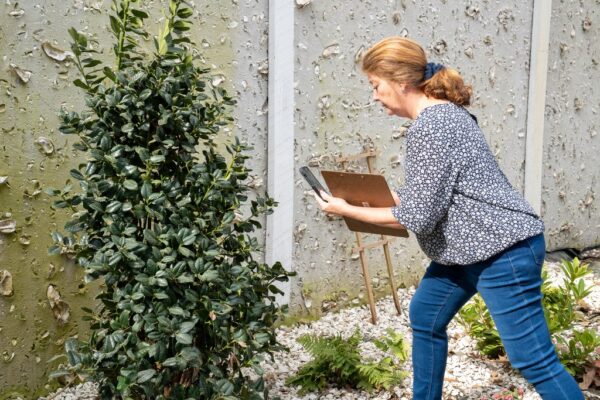
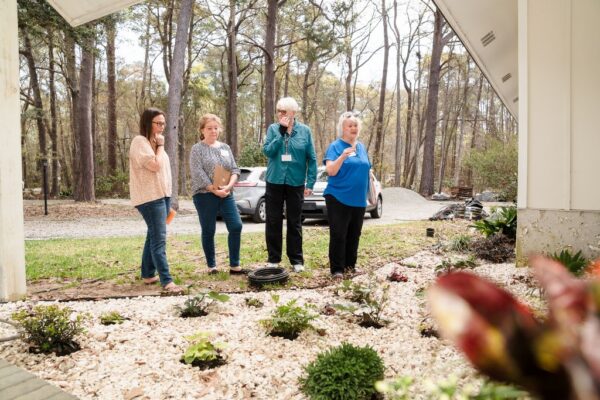
For a $75 fee, a team of Clemson University-certified Master Gardeners visits your home. The team walks your property with you, asks and answers questions, identifies plants, makes plant suggestions and provides guidance on good gardening practices and plant selection. About two weeks later, you receive a detailed report from the team with its observations and recommendations, including links to additional resources for more information.
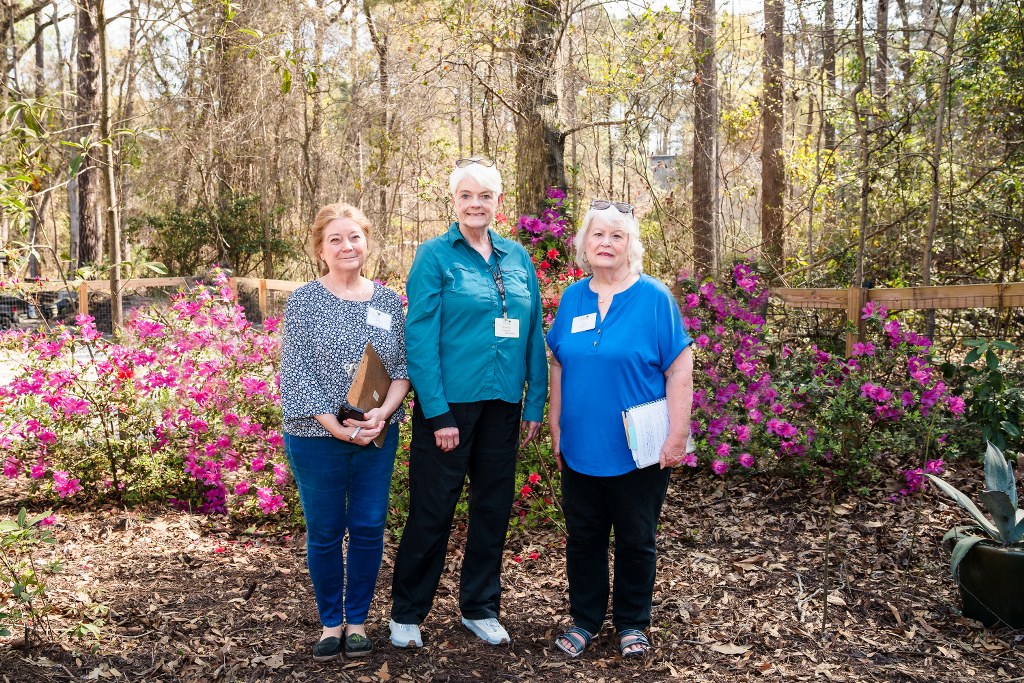
Victoria Bergesen is one of two team leaders serving the Beaufort area north of the Broad River. The visit starts by phone so she can understand the homeowner’s history and desires for the property. Then she recruits a team of two or three fellow Master Gardeners and interns for the in-person visit.
“The site visit allows us to interact one-to-one and create a personal connection,” she explains. “Every property is different and every homeowner is different. Some people want to garden, while some want a low maintenance landscape. Everyone’s budget is different, too, and we can make recommendations that fit it. We can point to something wrong and provide pruning, growing and transplanting advice. Palm trees, for example, often have nutritional deficiencies. Homeowners will remember when and where we stood together on their property and what we talked about much more vividly than if they’re just showing us a photo on their phone at the Ask-a-Master Gardener booth at the Port Royal or Bluffton farmers markets.”
The flourishing program was just a seedling when Master Gardener Emeritus Sandra Educate first planted it in 2007 with the idea of raising money for scholarships to Clemson University for students in horticulture-related majors. Now almost ready to celebrate its 20th anniversary, the program has grown to wait-list proportions and has allowed the LMGA to expand its philanthropic efforts to award three $2,000 scholarships each year.
To schedule a visit, go to the Lowcountry Master Gardener Association website at https://lowcountrymga.org/lowcountry-master-gardener-association-rent-a-master-gardener/. But be patient: “We always have a waiting list,” Victoria says.
MORE RESOURCES
• Soil sample analysis by Clemson’s Agricultural Lab. The Rent-a-Master Gardener team will provide instructions on how to take a soil sample and have it analyzed for a $6 fee. Submit your sample to the Beaufort County Extension Office at 18 John Galt Road in Beaufort or take it to the Lowcountry Master Gardener Plant Clinic in the Beaufort Governmental Center at 539 William Hilton Parkway in Hilton Head on Wednesdays between 9:30 a.m. and noon. You also can have plant diseases and pests identified for an additional fee.
• Clemson’s Home and Garden Information Center website. This site contains hundreds of fact sheets on gardening issues and plants that may help answer some of your gardening questions. Visit http://hgic.clemson.edu.