WHERE PAST IS PRESENT
A Lowcountry Conversation Beneath the Live Oaks
story by HEATHER STEINBERGER photos by SUSAN DELOACH
Warm golden light filtered through the branches of the moss-draped live oaks, spilling across the Rhett House Inn’s intimate garden and catching the rims of raised cocktail glasses. Conversations softened, then fell quiet, as the evening’s two featured guests took their seats.
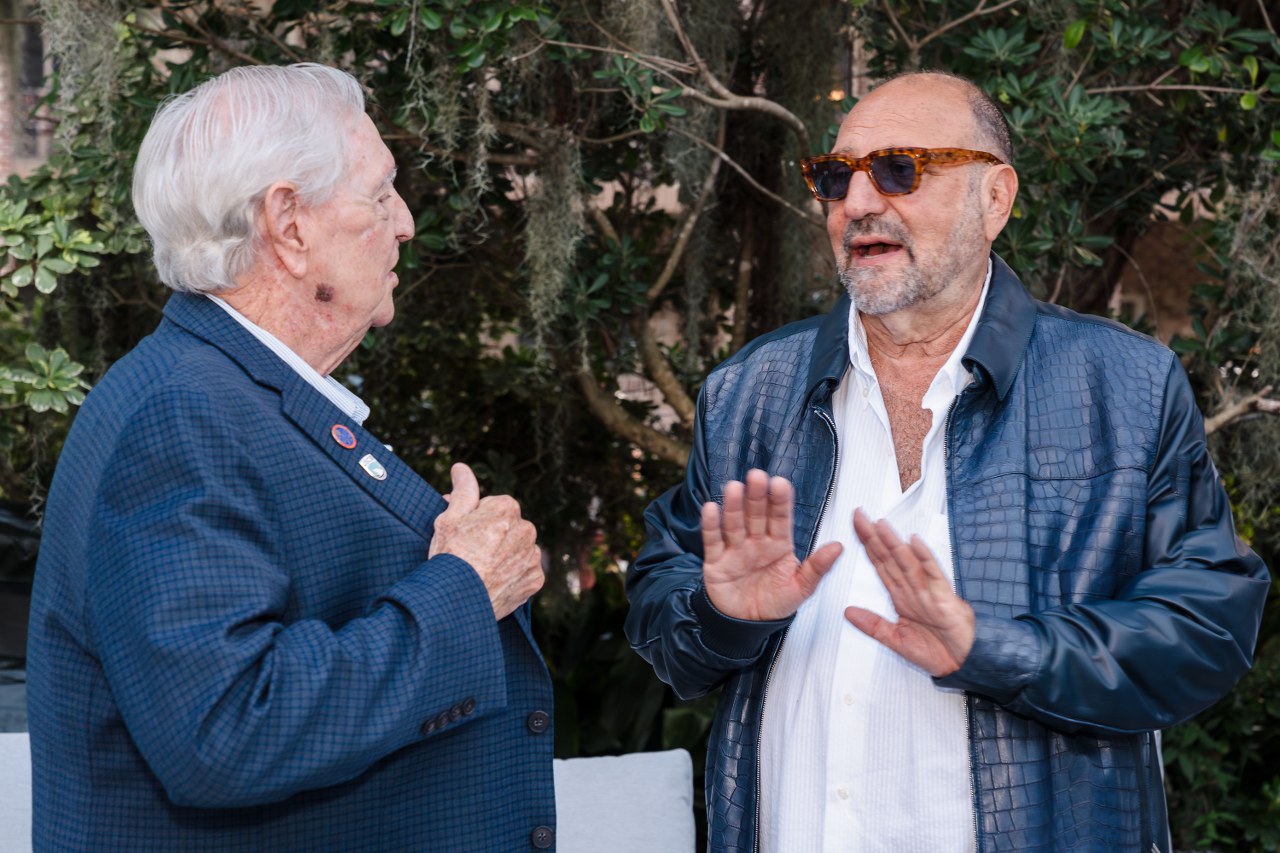
It was early evening on Oct. 3, and the invitation-only gathering had drawn an attentive crowd to one of Beaufort’s most storied addresses. Wall Street Journal reporter and author Valerie Bauerlein was about to join renowned South Carolina historian Dr. Larry Rowland in conversation, and locals and visitors alike leaned in to listen.

The balmy air held a sense of anticipation, and not for spectacle. While Bauerlein’s New York Times bestseller, The Devil at His Elbow: Alex Murdaugh and the Fall of a Southern Dynasty, chronicles the unraveling of a powerful Hampton County family, the book also examines how history, culture, and geography quietly shape lives over generations.
Here in Beaufort, where the veil between past and present is thin, it felt like the right conversation, in the right place.
Built circa 1820, the 6,000-square-foot Greek Revival mansion at 1009 Craven Street began its life as an “in-town plantation house” during the antebellum period. During the Civil War, it functioned as a Union hospital recovery building, and it withstood the catastrophic Sea Islands hurricane in 1893.
By 1986, the house stood empty. That year, a New York couple visiting Beaufort for the first time pedaled past the property on a bike tour. Already in love with the little city, Steve and Marianne Harrison decided to purchase the building and turn it into an inn.
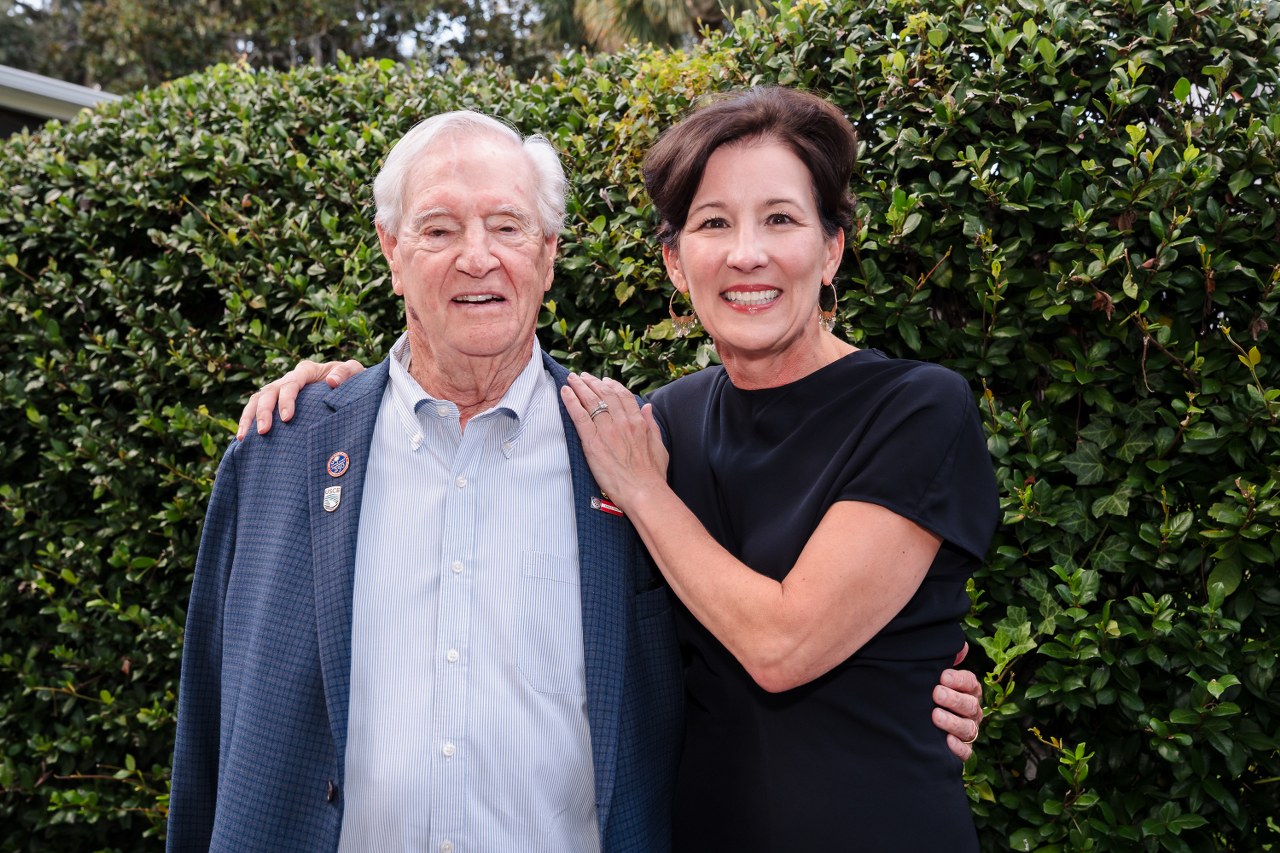
“They got it for a song,” says son John Harrison, the current innkeeper and owner. “They stayed in a back room while they expanded the inn from its original five rooms to 10 rooms. Later, dad built a two-bedroom home — the Newcastle House — which is now part of the inn.”
From the start, the Rhett House Inn was woven into the fabric of Beaufort life. Harrison recalls that his father, as innkeeper, became a notary public and officiated countless weddings, and his parents regularly opened the doors for special events.
“They always encouraged their guests to engage with the locals, because many guests become locals,” he says. “It happens.”
Harrison himself grew up in Wilton, Connecticut, and on Manhattan’s West Side. Despite a successful career in real estate and the music industry, he and his wife, Mimi Morrison of Yemassee, South Carolina, decided in early 2020 that they were ready for a change.
“We had two children by then, and the pandemic had just started,” he remembers. “We knew it was time to come here. We’re the stewards of this place. It’s been in my family for 40 years, and I’m carrying the torch.”
Like his parents, Harrison is dedicated to bringing guests and locals together for memorable occasions. Not only are the Rhett House Inn’s breakfasts, Sunday brunches, and evening cocktail gatherings open to the public, it also hosts oyster roasts, Kentucky Derby parties, pop-up holiday dining events, and even short film screenings in partnership with the Beaufort International Film Festival.

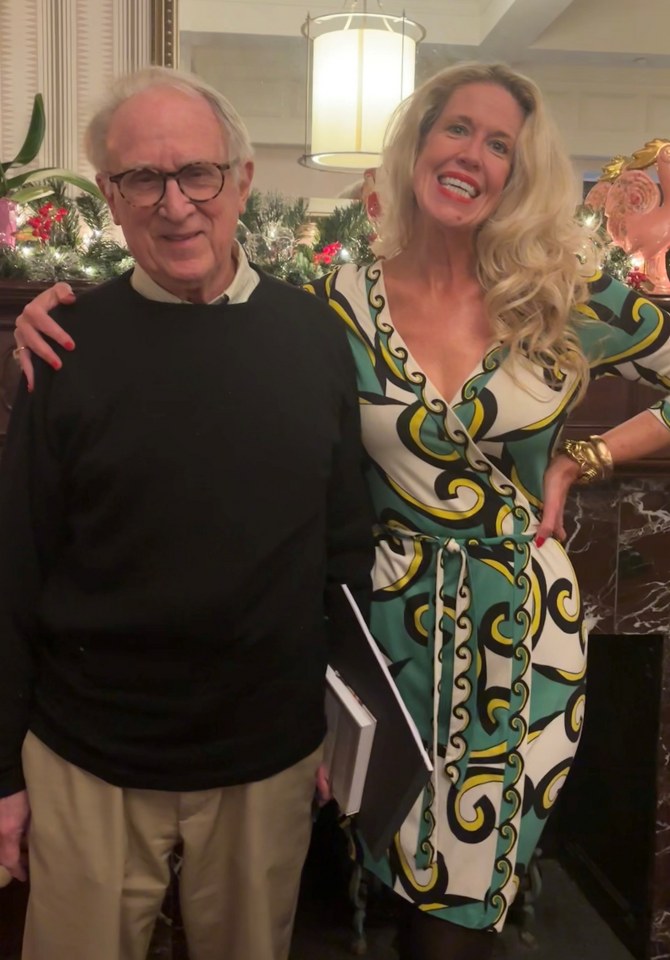

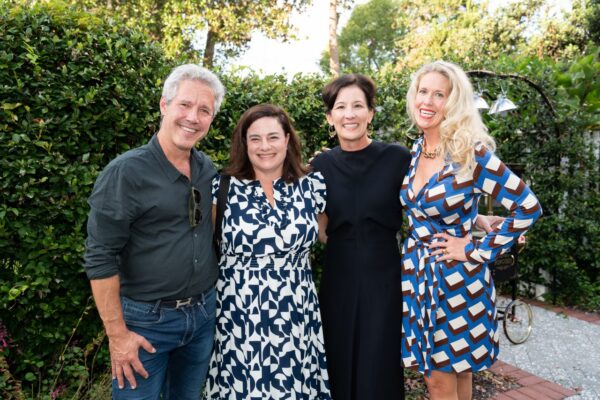
“We love bringing locals to our grounds,” Harrison says, adding that the invitation-only event with Bauerlein and Rowland was a great fit for the inn. To put the event together, he partnered with accomplished film producer (and Beaufort High School graduate) Brooke Brunson, who worked on the docuseries Low Country: The Murdaugh Dynasty, which premiered on HBO Max in 2022.
“Brooke brought the whole thing together,” he explains. “She knew Val, and she’d known my parents forever, so she came to me. We knew it could draw hundreds of people, but we kept it low-key.”
The gathering reflected a longstanding Beaufort tradition: opening doors, sharing stories, and allowing history to surface through conversation. The invitation list was intentionally curated, bringing together individuals who had played meaningful roles in Bauerlein’s reporting and research, as well as select community leaders and longtime Lowcountry residents.
For Bauerlein, the evening was a welcome return to a city she’d grown to love and appreciate.
“Beaufort is the epicenter of my book in so many ways,” she says.
As their conversation unfolded, Bauerlein and Rowland underscored a powerful geographical and historical truth: Beaufort and Hampton Counties were once part of the same district, but the forces shaping them were never the same. The Sea Islands evolved as a world apart, separated by tidal rivers and marshes, while the mainland followed a different trajectory altogether.
Rowland explains that the mainland remained largely Native territory well into the colonial period. The islands, by contrast, were settled early by European colonists, their development steered by Port Royal Sound and its access to the wider world.
When settlement eventually pushed inland after the Yamasee War, it followed a pattern distinct from the coastal plantation communities. The people who moved to the mainland were frontiersmen rather than planters, and parallel economies grew out of those differences.
For Bauerlein, that divide helped clarify Hampton County not as an anomaly, but as the product of its own unique historical path — one defined by scarcity rather than abundance.
From the start, Rowland says, wealth concentrated along the coast. Rice and indigo brought early prosperity to the Sea Islands, but it was Sea Island cotton that transformed Beaufort into one of the wealthiest communities in the young nation.
After the Revolution, Loyalists who resettled in the Bahamas provided rare cotton seeds from Anguilla, perfectly suited to the coastal climate. With the advent of the cotton gin, that advantage deepened.
“Everything you see now was built by cotton,” Rowland notes, observing that planters who had already grown wealthy had little idea how much richer they were about to become.
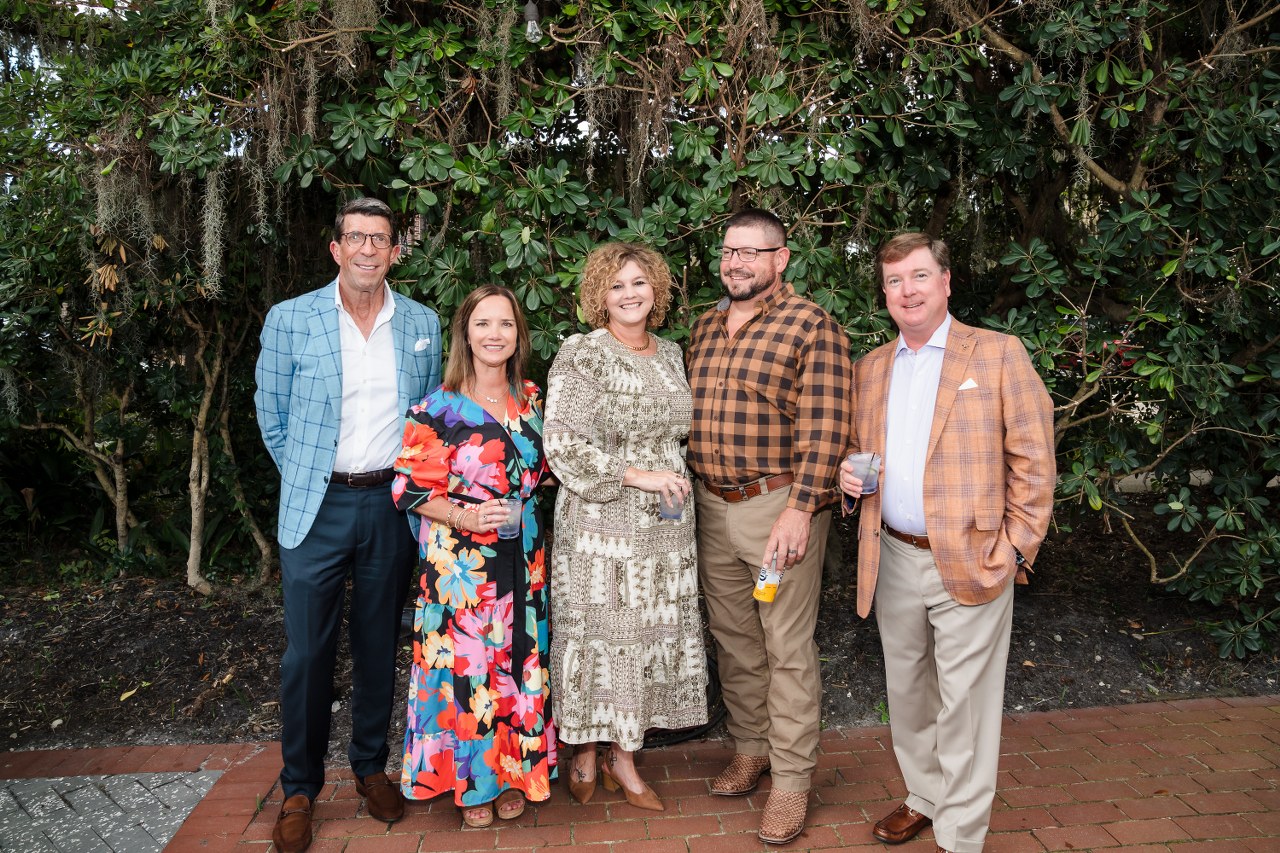
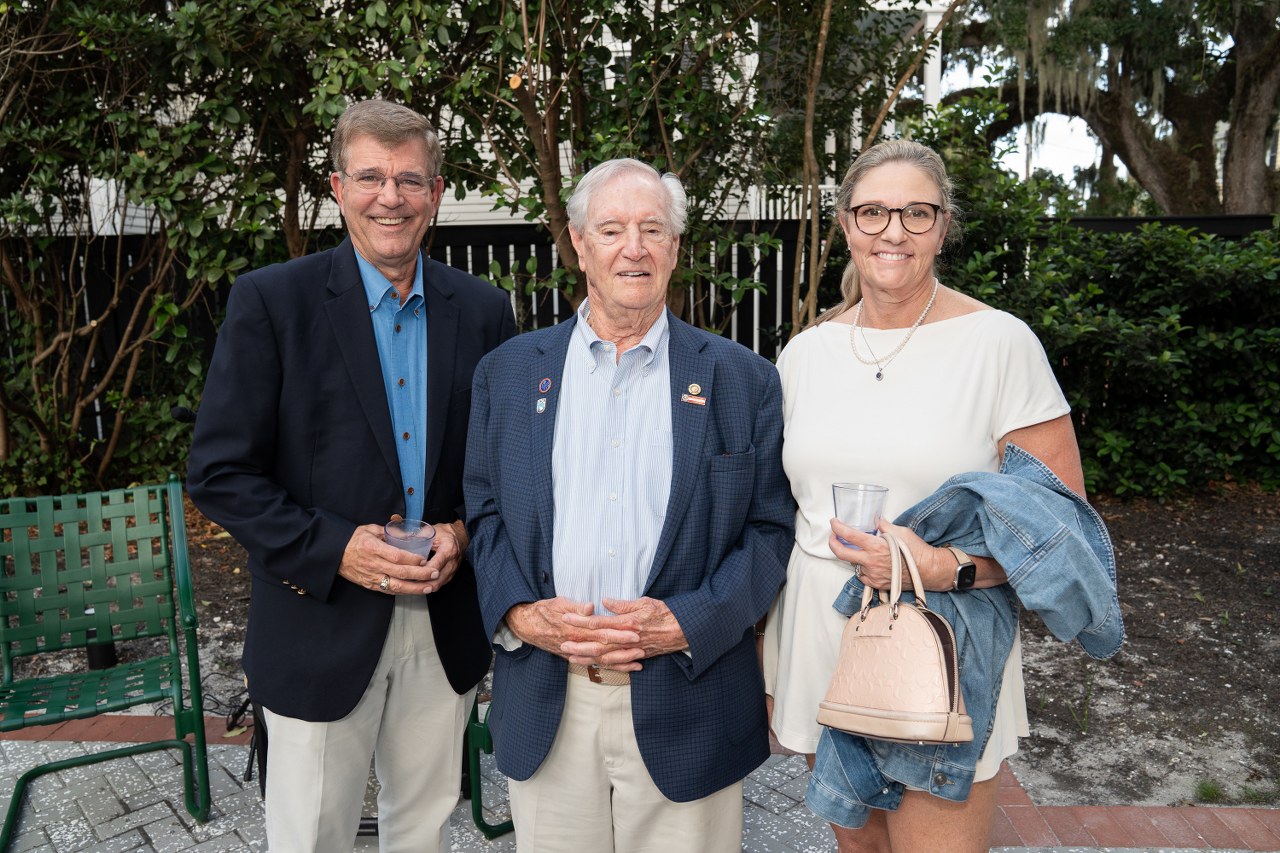
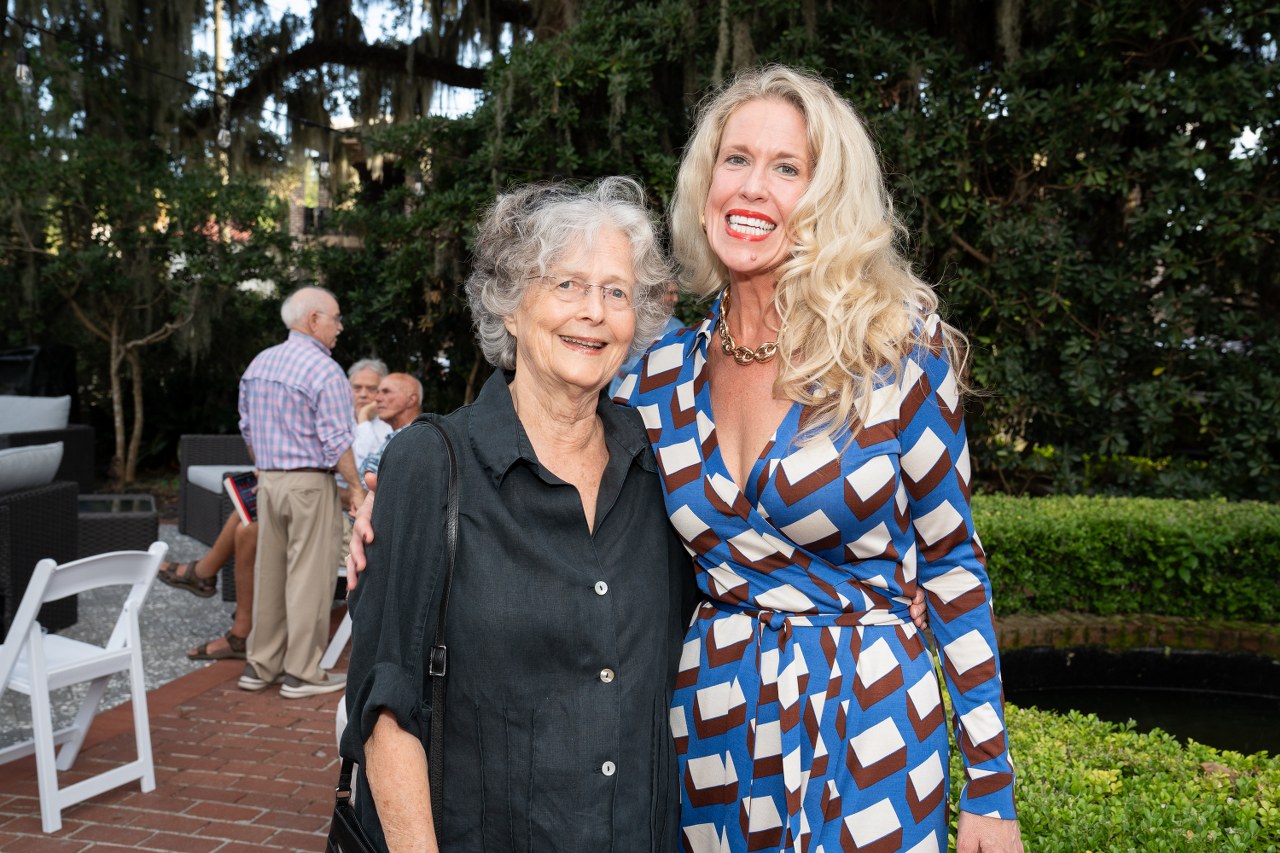
For Bauerlein, that concentration of coastal wealth and its absence inland became a key to understanding how power functioned differently across the Lowcountry. Inland communities followed a much harder road, and “necessity becomes the mother of invention,” as she observes.
The soil could not support Sea Island cotton, and while the mainland held vast acreage, its economic trajectory was slower and more precarious. The regions united briefly to support secession on the eve of the Civil War, but that moment did not last.
The Union occupation of Beaufort created yet another divide, Rowland says. The city emerged as a center of Reconstruction, Black political and economic leadership, and global engagement, while many mainland communities struggled with loss and isolation in the war’s aftermath.
The divide became official when Hampton County was founded in 1878. It was named for Wade Hampton III, a Confederate general who served as South Carolina’s governor from 1876 to 1879.
Bauerlein says it was during this period — the unraveling of Reconstruction and the hardening of racial and political divisions — that her book truly took shape. Although readers often come to The Devil at His Elbow seeking to understand a modern crime, the project began as an effort to understand the world that produced it.
“This started as a history book,” she reflects. “Everything I chose from the past had to lead to how we got here.”
Bauerlein and Rowland both note how often the past surfaces across the Lowcountry as a living force that continues to affect identity and opportunity. They also emphasize the openness for which Beaufort has long been known.
That openness to conversation, inquiry, and change is not accidental, Rowland explains. Beaufort retains its identity as a seaport and as a military town, forged through centuries of contact and exchange with the wider world.
“People here are interested and interesting,” Bauerlein adds. “They’re open to change. This is a dynamic place, and that is part of the fabric of the community.”
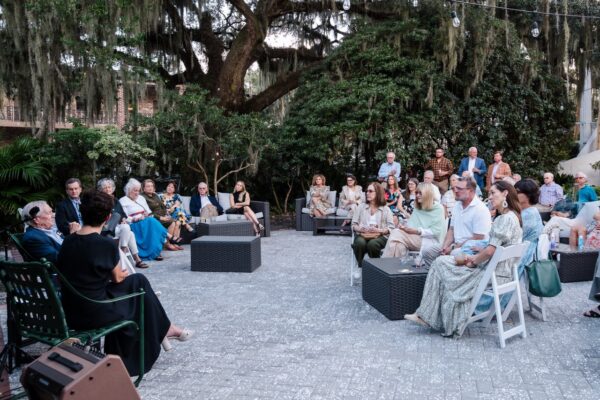
In that sense, the community’s willingness to examine its past is uniquely Beaufortonian — not as an academic exercise, but as a living practice. History comes alive in spaces where people gather to listen, reflect, and share stories.
In October, the Rhett House Inn served as one such space. For one evening, its private garden transformed into a container for connection, conversation, and public memory.
Owner John Harrison says he would love to host more events like this, and he plans to make investments in the Rhett House Inn’s outdoor garden to help facilitate that. These might include an outdoor kitchen and a pergola for shade.
“People appreciate the garden for public events,” he says. “You can feel the history out there.”
Learn more about the Rhett House Inn at rhetthouseinn.com